Focusmate alternatives: Which focus tool is better?

By Eleanor Hope-Jones
•
May 01, 2024
With virtual coworking becoming the norm for huge swathes of the population, we’ve decided to review Focusmate focus sessions alongside some of the internet's most popular virtual coworking platforms. The goal is to compare and contrast their unique productivity features, work session design, and how they connect with users.
So, keep reading to find the virtual coworking space of your dreams as we review Focusmate, and Focusmate alternatives – Caveday, Flow Club, and FLOWN.
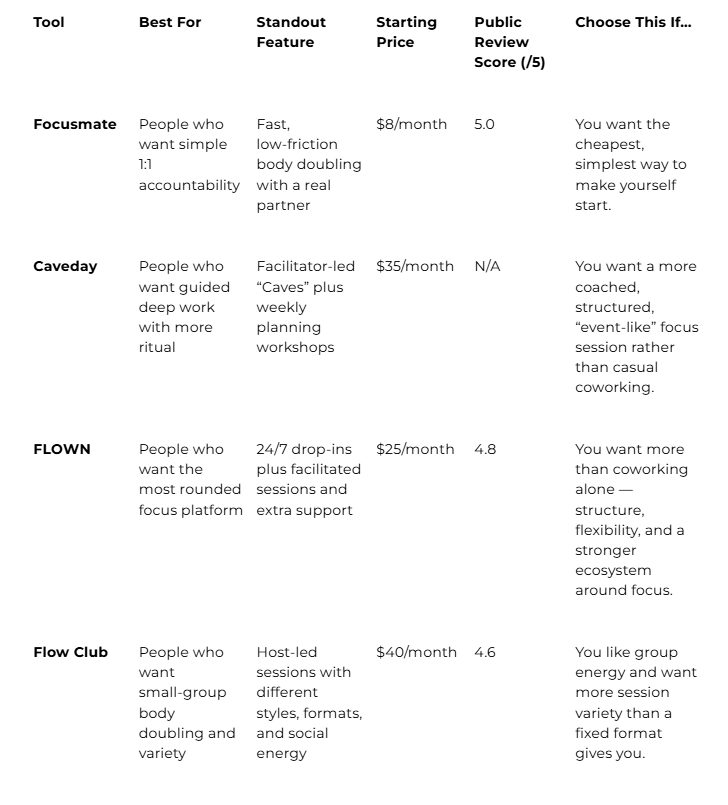
Pick the right coworking tool fast
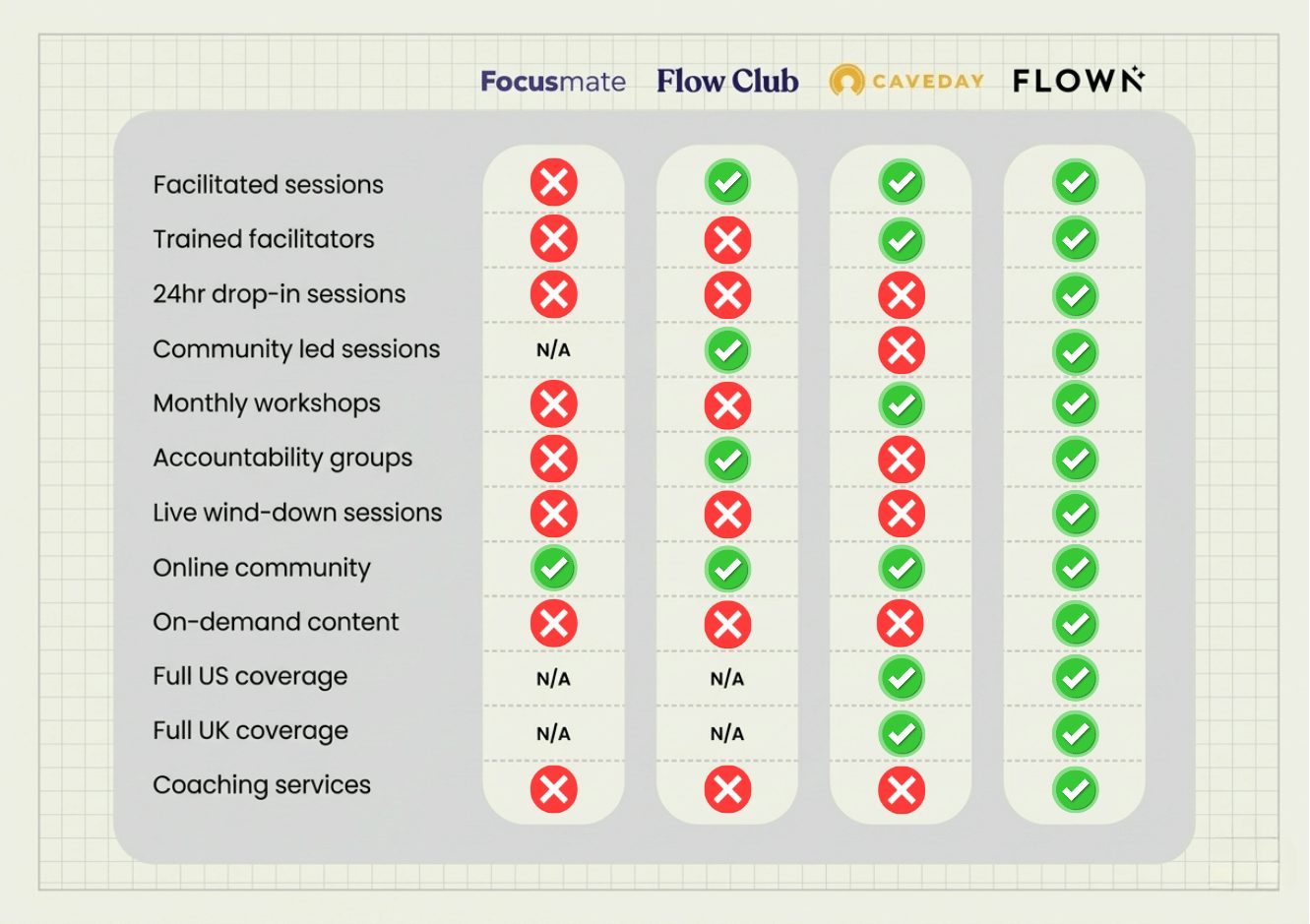
Focusmate: Best for simple 1:1 accountability. It’s the clearest option if you just want to book a session, get paired with one person, say your goal out loud, and work.
Caveday: Best for people who want guided deep work with more ritual and structure. Its core offer is facilitator-led focus sessions, plus planning workshops, events, and tools around improving your relationship with work.
Flow Club: Best for people who want structured body doubling in small groups with lots of variety. It leans into hosts, visible goals, schedules, and external accountability, which makes it especially strong for people who like social energy and session choice.
FLOWN: Best for people who want an all-round focus platform, not just coworking. It combines body doubling with expert-facilitated sessions, community, and extra support like ADHD coaching and on-demand resources.
1. Focusmate review: How good is Focusmate, really?
Focusmate at a glance
How does Focusmate work?
Focusmate offers a unique coworking experience by pairing users with accountability partners, or ‘focus buddies’. It’s like having a gym buddy, but for work.
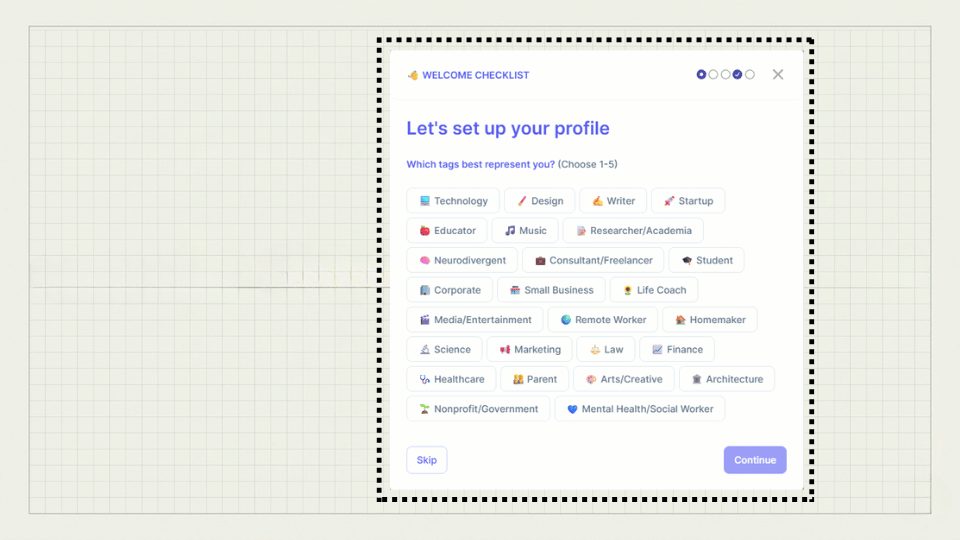
You simply choose your interests in the beginning and let the algorithm learn about you.
Then you book a session and specify what you want to focus on during that time. The platform then pairs you with a partner who is also looking to focus during the same time slot, and you both share your intentions for the session.
Focusmate main features
1:1 focus sessions: You book a session and get matched with one other person to work alongside in real time.
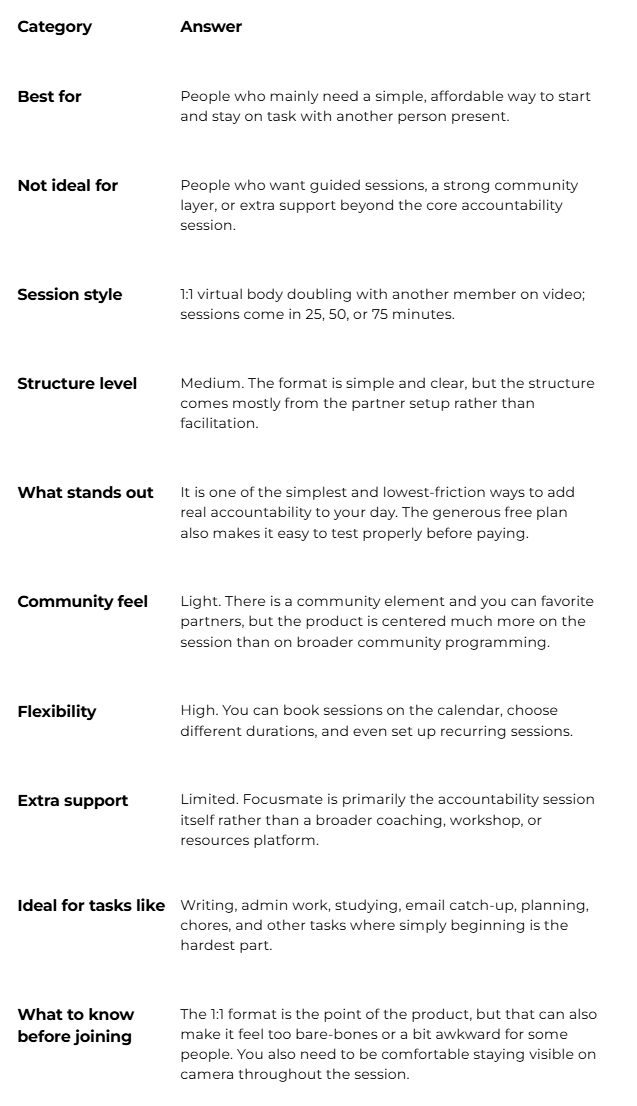
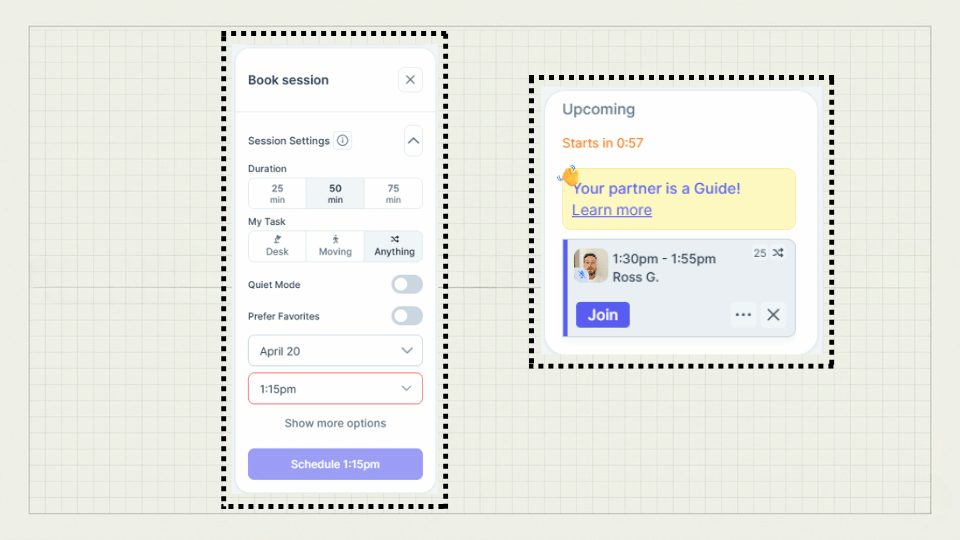
Flexible session lengths: You can choose 25, 50, or 75 minutes depending on the task and your energy.
Favorite partners: You can save people you work well with and choose to cowork with them again.
Task modes: Different modes like Desk, Moving, and Anything help the session fit the kind of work you’re doing.
Quiet Mode: You can still use Focusmate in places like libraries or cafés without needing to speak.
What are the benefits of Focusmate?
I will say the 1-1 element is a bit intense. It can make the initial moments of the session feel a little awkward because you’re in there with user who you haven’t met yet.
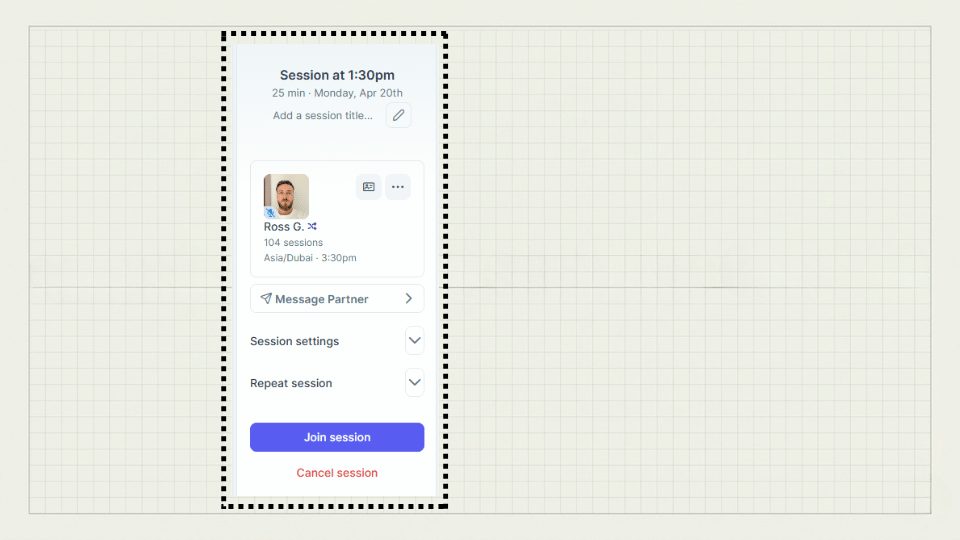
But once you get going, the implied sense of accountability from working alongside your focus buddy really helps you stay focused on your work.
However, the biggest challenge is that without the backup of working alongside a large group the ever-present risk of a no-show can easily disrupt your workday and scupper attempts to get into flow.
How long is a Focusmate session?
You can book sessions of 25, 50, or 75 minutes by either joining a slot that’s been set up by another user or creating a slot of your own.
What is a Focusbuddy?
A focus buddy is your partner during a Focusmate session. They're your peer in productivity, present to help keep both of you on task. Each time you join a session, you’ll buddy up with another user the platform has paired you with.
If you get especially comfortable with a particular user, you can favorite them to arrange to buddy up more often.
Does Focusmate cost money?
One of the standout features of Focusmate, is the cost. Although there isn't the assortment of sessions and resources that you get with some Focusmate alternatives, access is free for up to three sessions per week, and you don't need to provide any credit card information to sign up.
If you need more sessions, you can upgrade to Focusmate Plus for unlimited sessions.
Focusmate pricing: How much is Focusmate a month?
You can get unlimited access to Focusmate at a cost of $6.99 a month (billed yearly) or $9.99 a month (billed monthly).
How easy is it to use Focusmate?
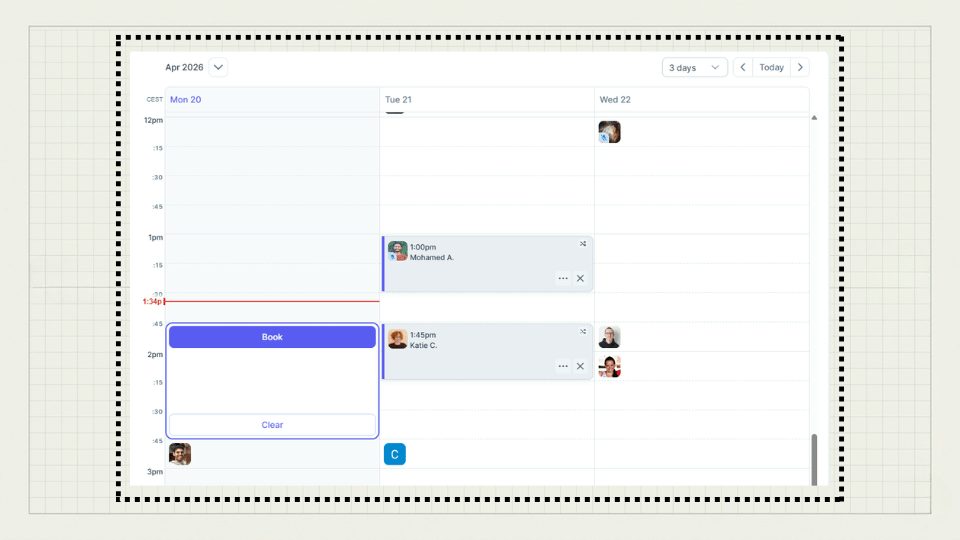
A notable plus when reviewing Focusmate is how pleasingly simple and straightforward the platform is to use. While the initial calendar view can feel a bit overwhelming, it isn't too difficult to navigate and find what you're looking for.
You can also:
Browse and join sessions that have been scheduled by others
Schedule a new session and wait for a partner to sign up for it as well
Toggle the dashboard to see my upcoming and past sessions.
On the whole, the interface is designed to get users quickly into sessions with minimal hassle.
Is there a community around Focusmate?
While Focusmate doesn't offer a robust community element in the way that some Focusmate alternatives do, it does allow you to build specific relationships with other users over time.
As you work with the same people repeatedly, you can favorite them, create locked-in sessions with your favorites and develop a long-time working rapport with these individuals.
Is Focusmate safe?
The question of whether Focusmate is safe is common within Focusmate reddit threads. With many assuming working 1-1 alongside a stranger may carry more risk of an unsavory experience compared to the group sessions offered by some Focusmate alternatives.
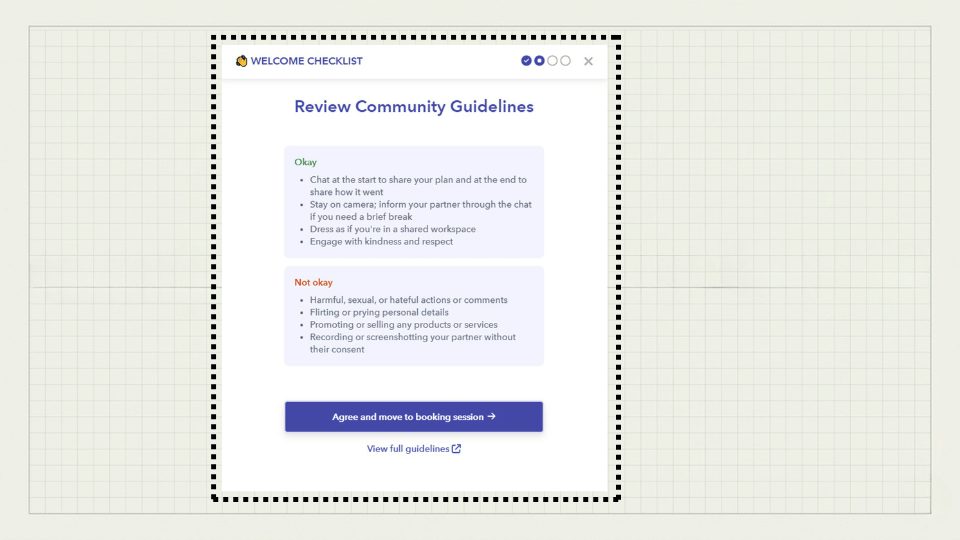
However, with stringent privacy policies and community guidelines, Focusmate does aim to prioritize user safety. Plus, a simple tap on the ☆ of a focus buddy’s profile means you can easily curate a list of trustworthy users you’ve enjoyed focusing alongside.
But if you feel more comfortable in a group setting, then a Focusmate alternative might be better for you.
Can Focusmate help me with personal development?
Beyond its blog, Focusmate doesn't appear to provide personal development resources, so it’s best for those who are looking for a no-frills virtual coworking platform to stay focused and accountable, and nothing else.
Best for and not ideal for
Best for: people who want a simple, affordable way to add accountability to their workday. Focusmate is a strong fit if your main challenge is getting started, and having one other person quietly working alongside you is enough to keep you moving.
Not ideal for: people who want more guidance, a stronger sense of community, or support beyond the session itself. If you prefer facilitated group sessions, extra resources, or a platform that feels more rounded than transactional, another tool may suit you better.
2. Focusmate alternative: Caveday
Caveday at a glance
How does Caveday work?
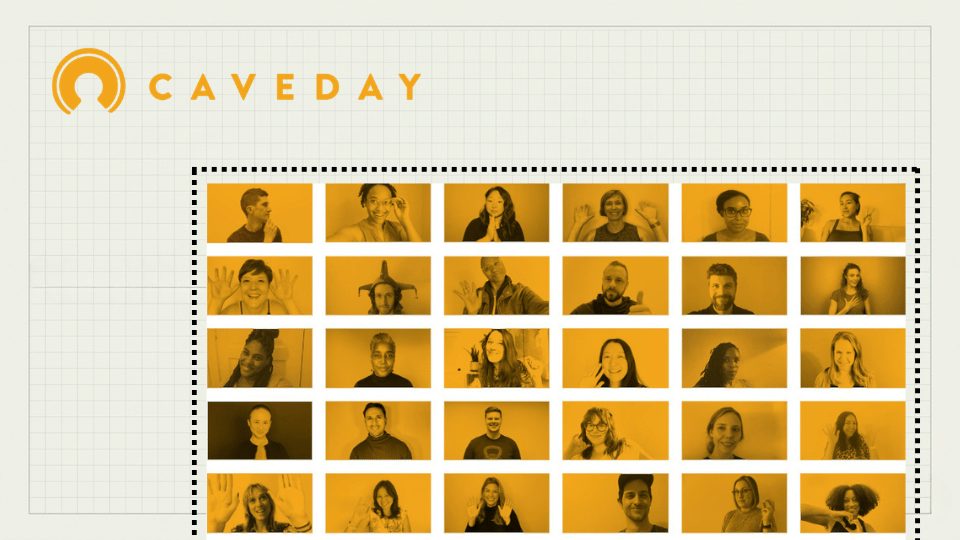
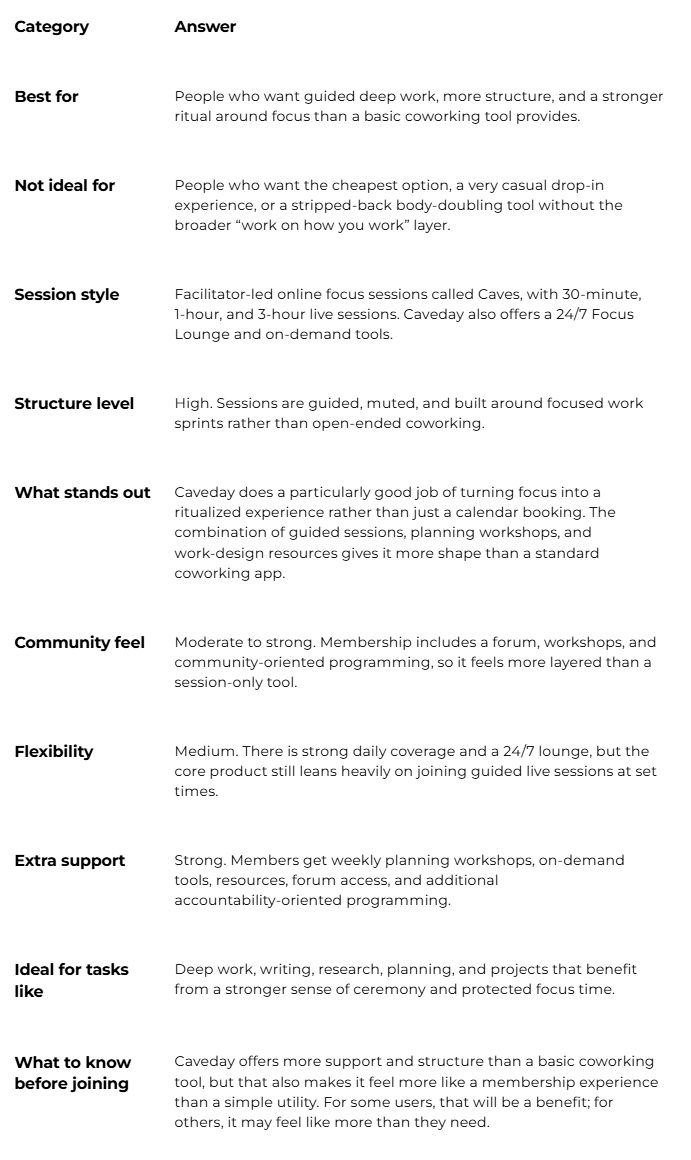
A popular Focusmate alternative, Caveday offers facilitator-run deep work sessions, referred to as being inside the cave, as well as a host of member events and personal development courses.
Caveday sessions last between one and three hours and are led by a facilitator over Zoom who guides you through one to three-hour-long sprints of deep work.
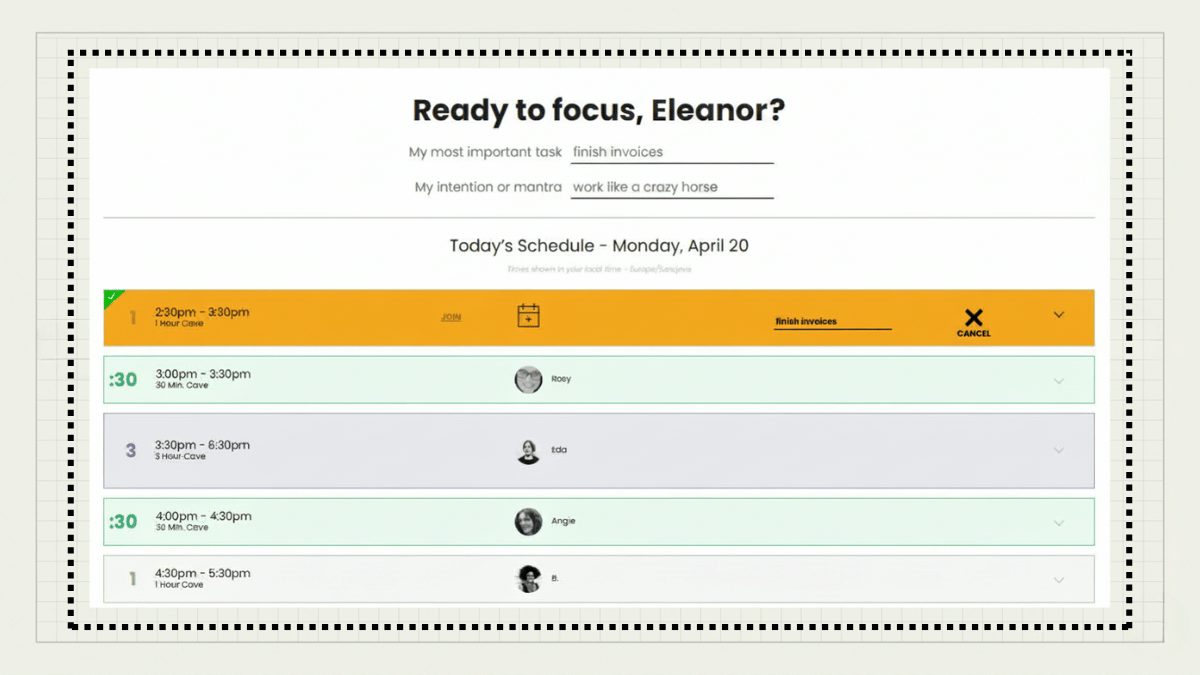
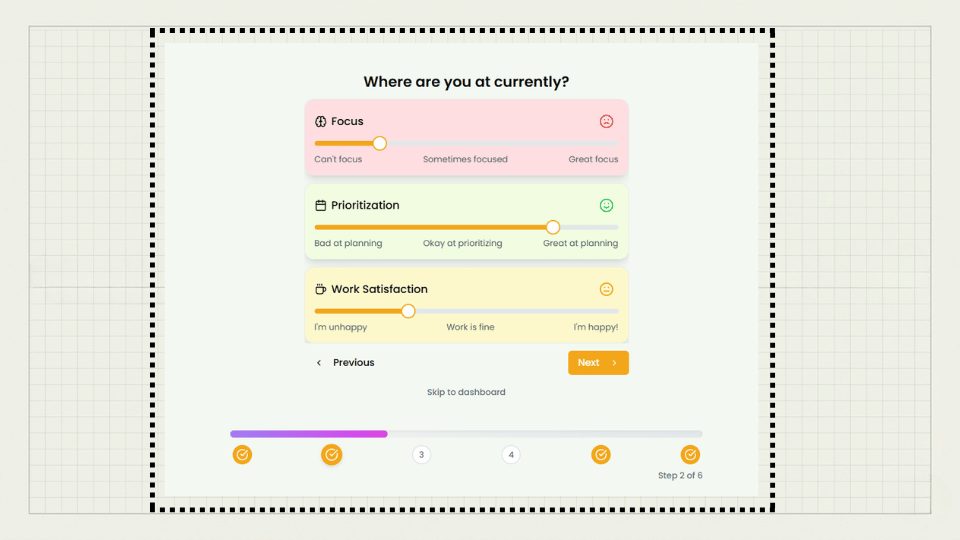
Two aspects that really stood out to me were the pleasant onboarding experience and the physical artifacts and rituals provided to enhance the experience.
The inside/outside the cave coin is a tangible reminder of the transition into deep work mode, while the signal-blocking phone case is a practical tool to minimize distractions.
I also appreciated the physical ritual of rubbing hands together and clapping before entering the cave and starting my session - it helped me mentally prepare and get into the zone. These small touches added a lot to the overall atmosphere of the platform and helped me find my flow.
If a specific session isn’t running, you can try out a solo-cave deep work session, but it wasn’t as effective as a live deep work session with others.
Caveday main features
Guided focus sessions: Caveday runs live online “Caves” led by trained guides rather than leaving the session self-directed.
Deep work sprints: Sessions are built around focused work blocks designed to help you settle into sustained concentration.
Energizing breaks: Short guided breaks are built into the format to help maintain energy and avoid burnout.
Weekly planning workshops: Members get planning sessions to help structure the week and reflect on progress.
24/7 Focus Lounge: There is also an always-available body-doubling space for accountability between live sessions.
How much is Caveday?
In terms of cost, Caveday is toward the steeper end of the market at $39 per month, with discounted rates of $35 per month when paid quarterly or $30 per month when paid annually.
There’s also a basic membership option of $9.99 per month, but you only get access to four monthly sessions and the unfacilitated 24/7 Focus Lounge.
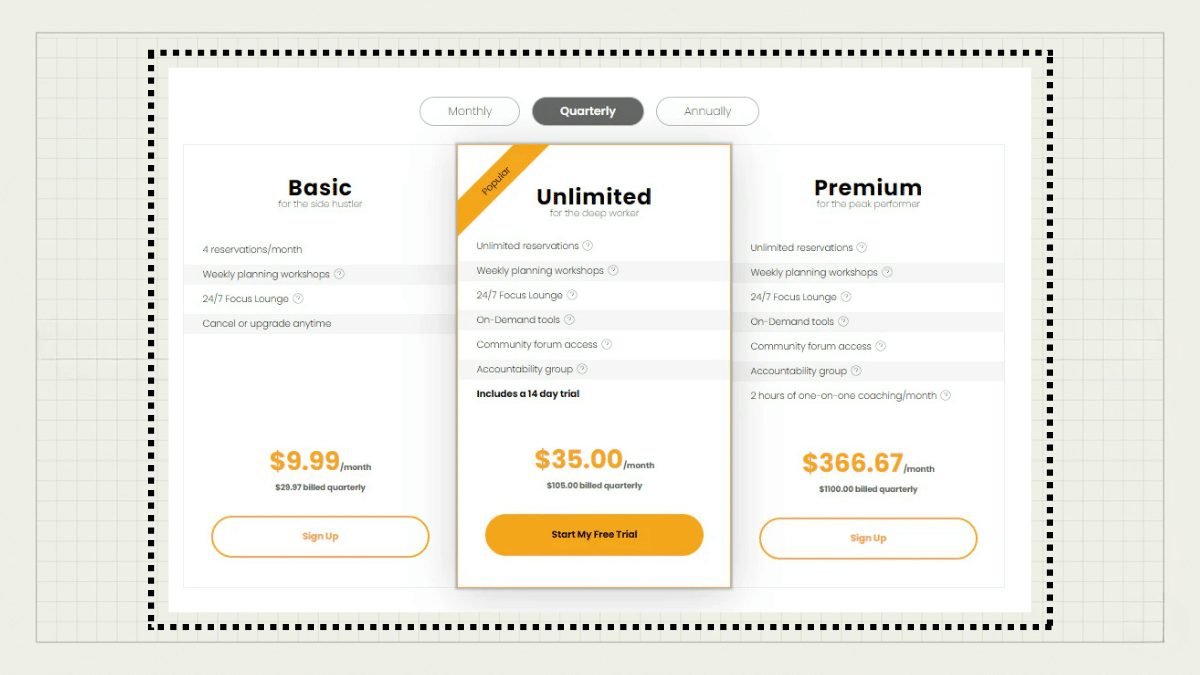
There is a free 14-day trial available, but I had to input credit or debit card details to try it. This added a bit of extra stress about whether I’ll remember to cancel the trial if I don’t go forward with Caveday, and was not a barrier I encountered on the other platforms.
Although I liked the platform, I found the sessions and resources available with FLOWN to be as good or better, yet for less than half the price.
Is there a community around Caveday?
The community aspect of Caveday is great, with cavers able to engage with a Slack-like forum to introduce themselves to each other.
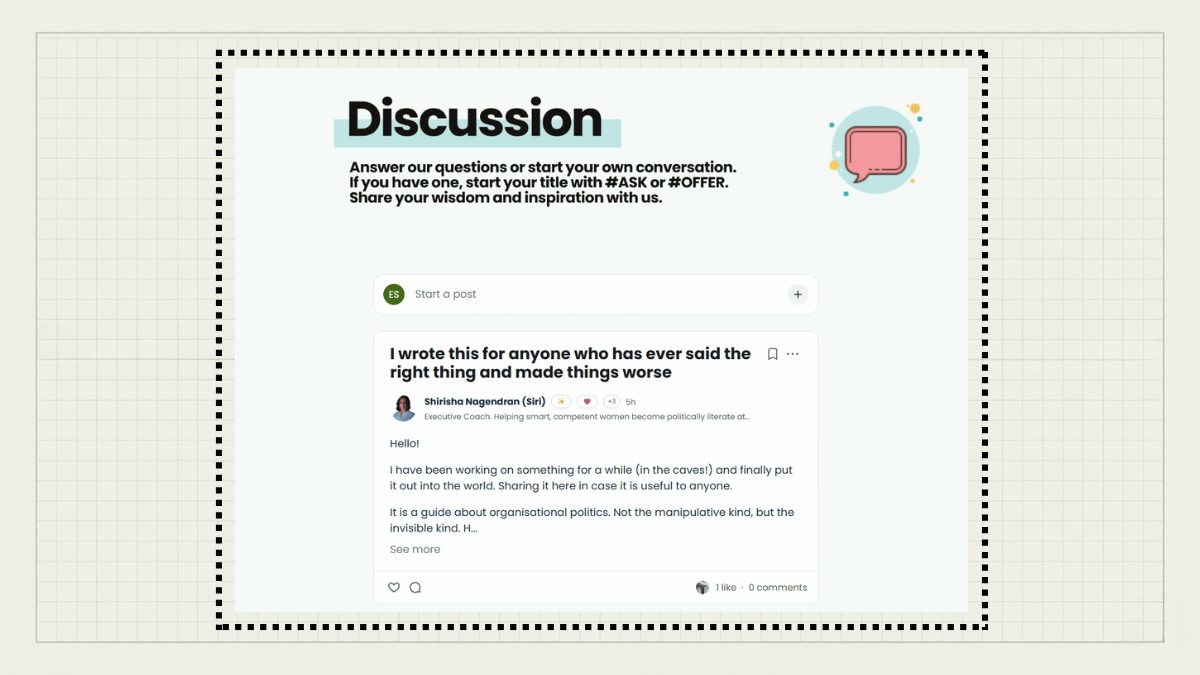
Regular challenges like the Cave Squad Accountability Challenge provide financial rewards or punishments for not completing goals, which made me think Cavers are pretty work-hard play-hard people.
I also liked the look of some half-hour facilitated cave-dweller meet-ups: just long enough to get to know your virtual co-workers without getting Zoom social fatigue.
Caveday’s community is built around group sessions and frequent workshops, creating a strong sense of collective ambition.
Can Caveday help me with personal development?
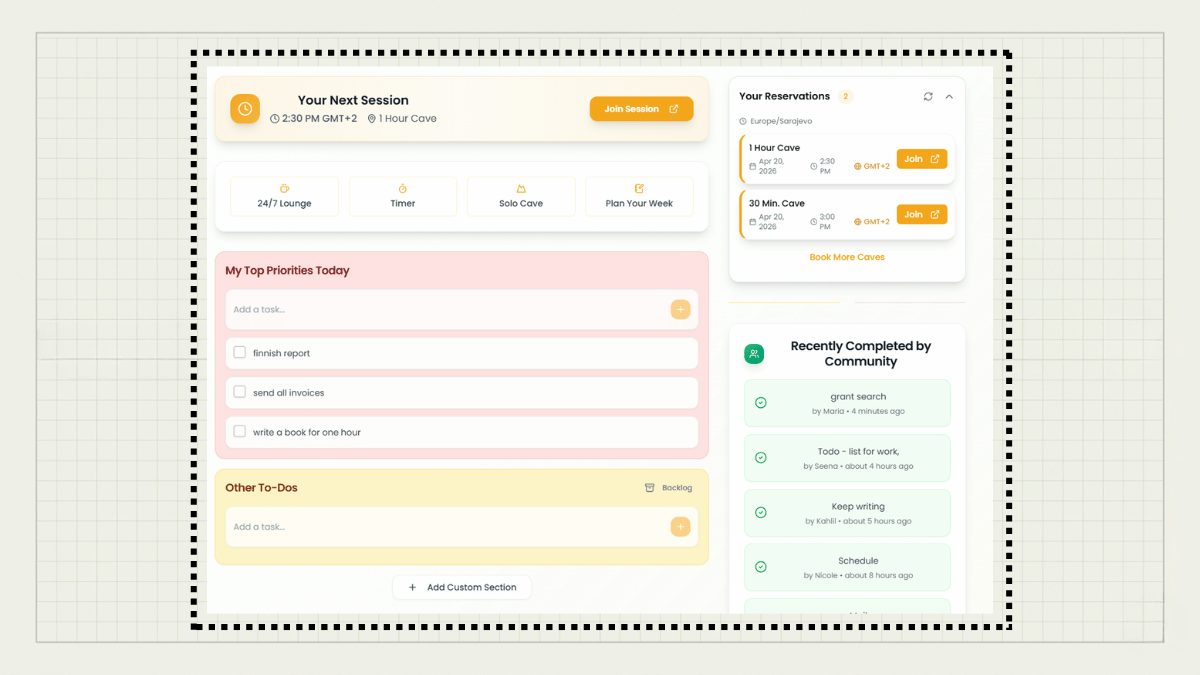
In terms of personal development, there were some great planning templates, included within the membership, for weekly, monthly, and yearly use, as well as specific caves allotted to filling them out.
Monthly deep dive podcasts with experts in their field and on-demand content in planning, focus, inspiration, and onboarding are also available.
Caveday also offers extra courses for an additional cost. For example, their 7 core skills of knowledge work for an additional $300 for members ($450 for non-members), but it seemed like a lot of money to pay for a course in addition to the already hefty membership fee.
Overall, I found Caveday created a real sense of “now is the time to get work done” through monotasking inside the cave and deliberate planning, as well as learning more about productivity through academic learning. But perhaps it isn't the best value or most comprehensive platform available.
Caveday versus Focusmate
While both platforms offer accountability, Caveday's structured environment contrasts with Focusmate’s more flexible 1-on-1 sessions.
With Caveday, you get the added polish of engaging member content, facilitated sessions, events, and merchandise. If you’re after a robust virtual coworking environment, with intriguing ways to gamify your productivity, you’ll find a solution that suits you in Caveday, albeit at a considerably steeper cost.
Focusmate on the other hand offers a cheaper and more streamlined tool for your focus, best suited to those after an easy-to-use platform without the bells and whistles.
However, if you’re looking for the robust virtual coworking environment of Caveday but at a price point a little closer to Focusmate, FLOWN may be your best bet.
Best for and not ideal for
Best for: people who want more guided, structured deep work than a basic body-doubling tool provides. Caveday is a good fit if you like facilitator-led sessions, want your focus time to feel more intentional, and value the added layer of workshops, planning support, and community.
Not ideal for: people who want the cheapest option or the simplest possible way to get accountability. If you prefer a more flexible, low-friction setup without the broader membership feel, Caveday may be more than you need.
3. Focusmate alternative: FLOWN
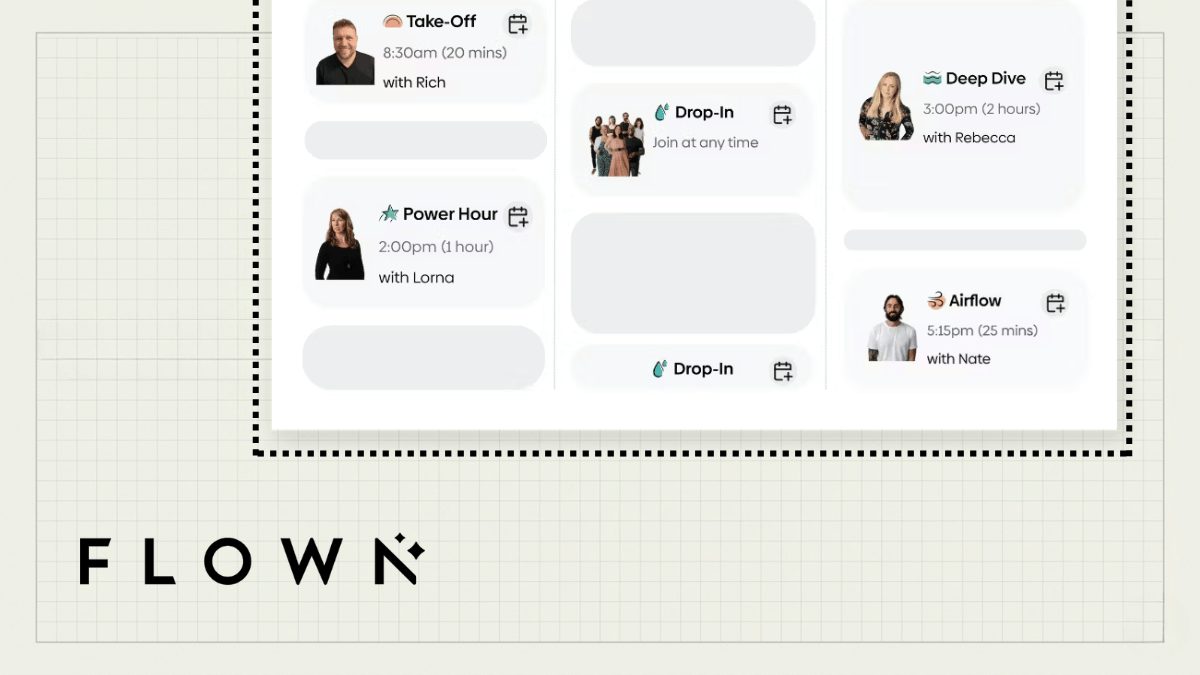
FLOWN at a glance
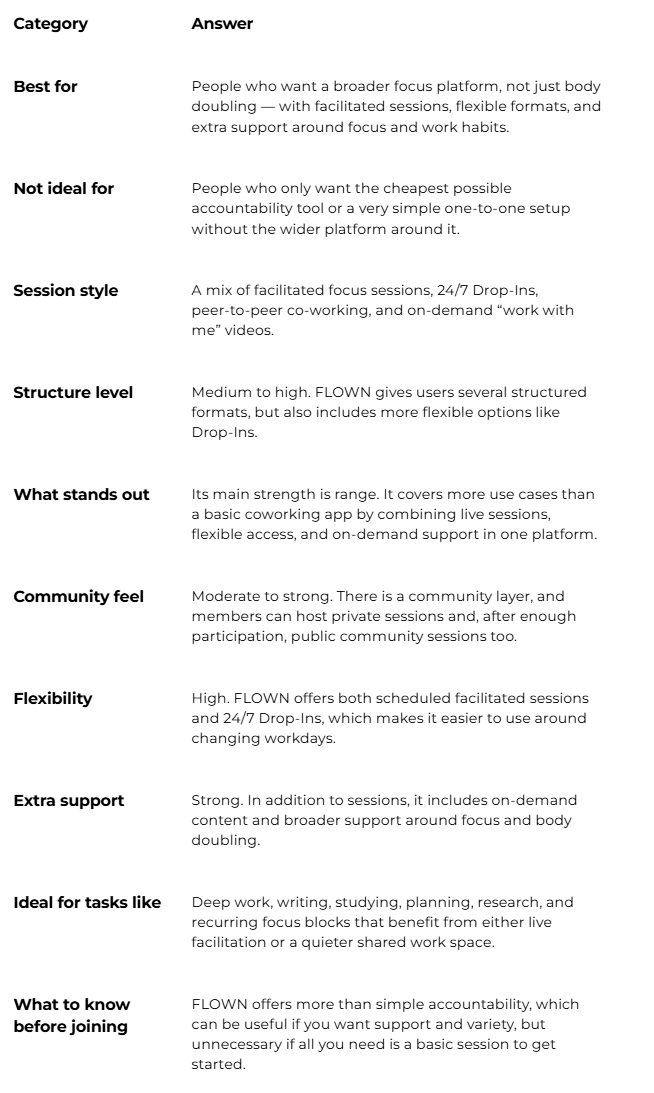
FLOWN sits somewhere between a simple accountability tool and a broader focus platform. It combines facilitated virtual coworking sessions with community features, 1-to-1 sessions, and additional resources (like ADHD Hub) aimed at helping people work with more structure.
That makes it a stronger fit for people who want more than a basic body doubling app, but do not necessarily want something as ritual-heavy or workshop-led as some other alternatives.
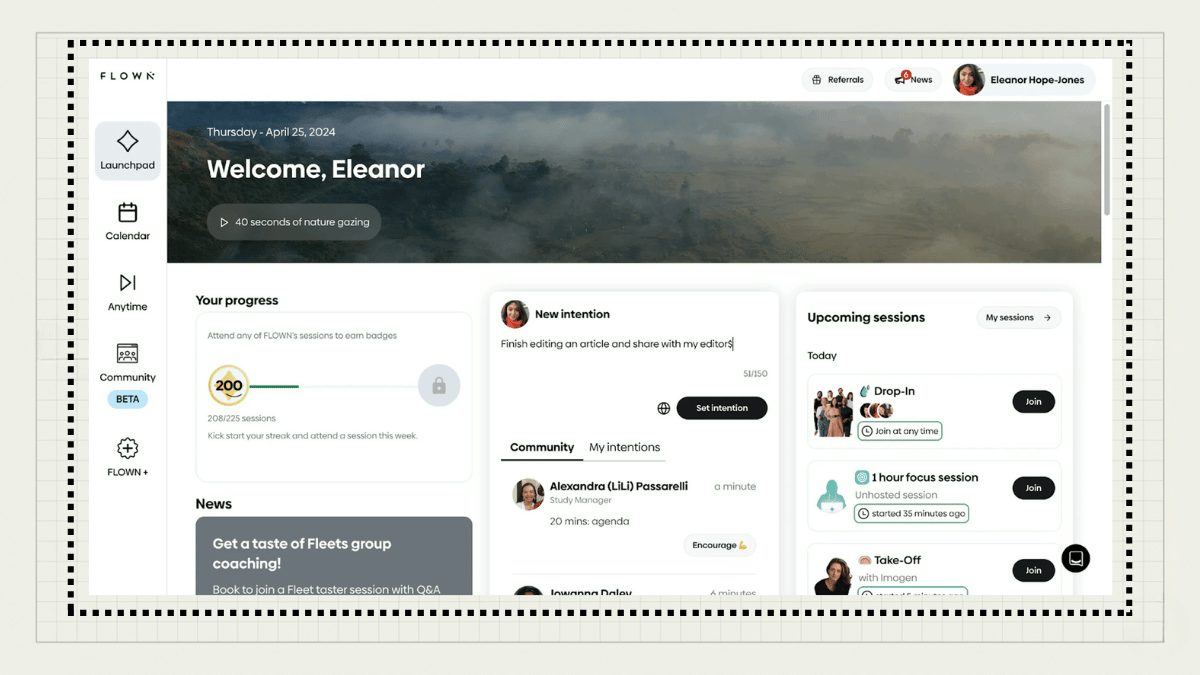
Alongside its facilitated sessions, FLOWN also allows users to set up 1-to-1 focus sessions with friends, colleagues, or other members, which makes it a practical alternative to platforms built primarily around one-to-one accountability.
How does FLOWN work?
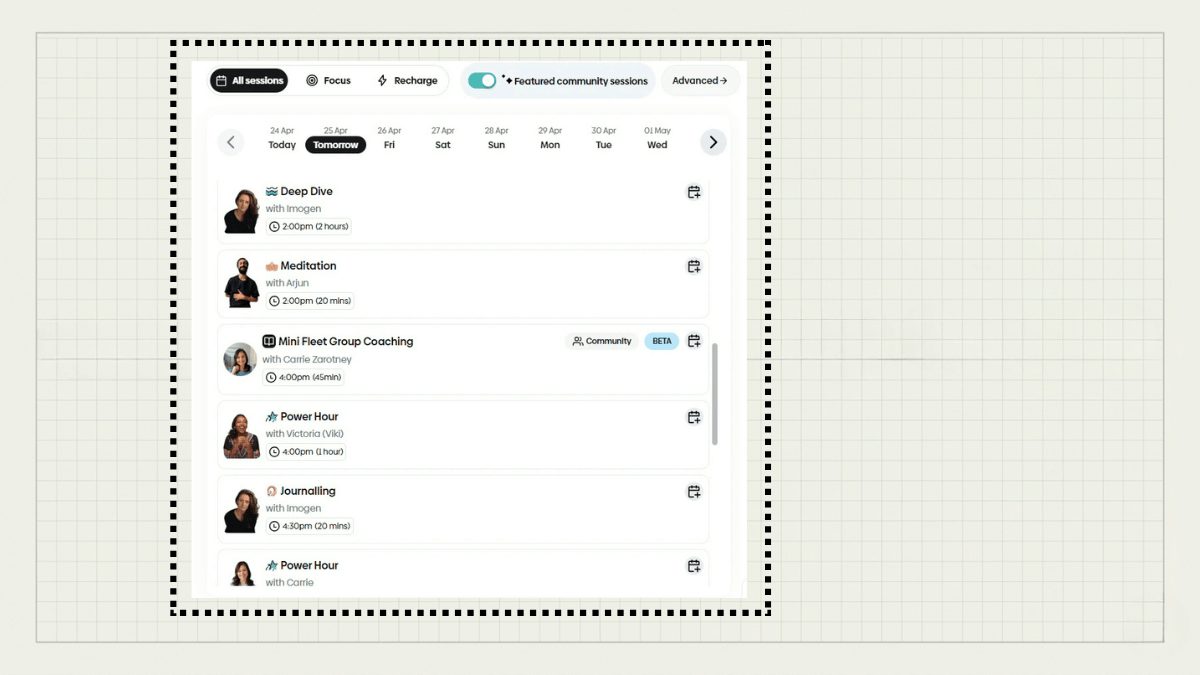
FLOWN is built around scheduled focus sessions designed to help people work with more intention and consistency. Its approach combines live facilitation, recurring session formats, and optional community features rather than relying on one single style of coworking.
The platform includes its own calendar and can integrate with Google Calendar or iCal, which makes it easier to build recurring sessions into an existing work routine. That is especially useful for people who do their best work when focus time is planned in advance rather than decided on in the moment.
FLOWN offers several facilitated session formats.
Focus Sessions: Structured sessions led by a trained facilitator, usually with a short intention-setting moment at the start, a protected focus block, and a close.
Community-hosted sessions: Sessions that follow the same general focus format but are hosted within the community and often feel a bit smaller or more familiar.
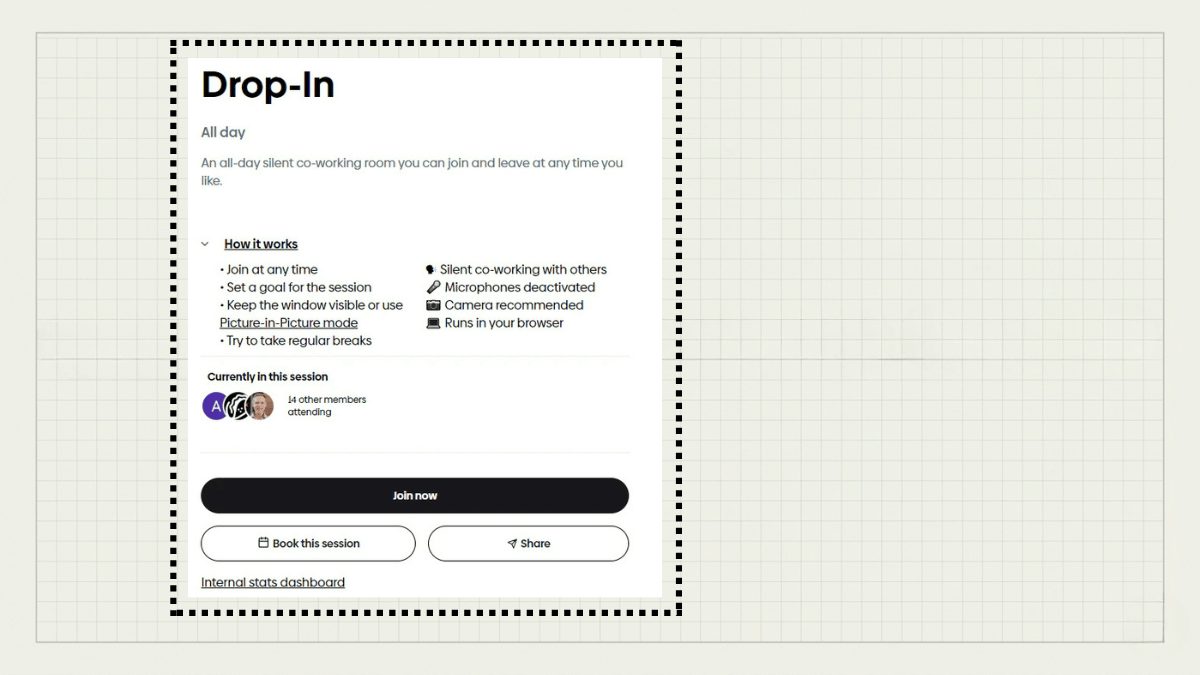
Drop-In: A 24/7 focus room you can join anytime when you need to start immediately, rather than wait for a scheduled session.
Focus Room / private sessions: A private on-demand space where you can work alongside friends or invited people in a more personal session setup.
Take-Off sessions: Guided planning sessions that help members decide what to work on and set a clear intention before they begin.
Recharge sessions: Guided reset sessions such as meditation, breathwork, mindfulness, or movement that support recovery between focus efforts.
FLOWN main features
Facilitated focus sessions: FLOWN offers live guided sessions such as Power Hour and Deep Dive for structured deep work.
24/7 Drop-In room: You can join an always-open virtual focus room when you want accountability right away.
Focus Room: You can open a private on-demand space in your browser and work alone or with friends or teammates.
Planning sessions: Daily and weekly Take-Off sessions help you set priorities and plan your work more intentionally.
Recharge sessions: FLOWN also includes guided reset sessions like breathwork, mindfulness, or gentle movement.
How much does FLOWN cost?
FLOWN is priced more like a premium focus platform than a basic accountability tool. It costs around $25 per month on a monthly plan, or $19 per month when billed annually, with additional plan options available.
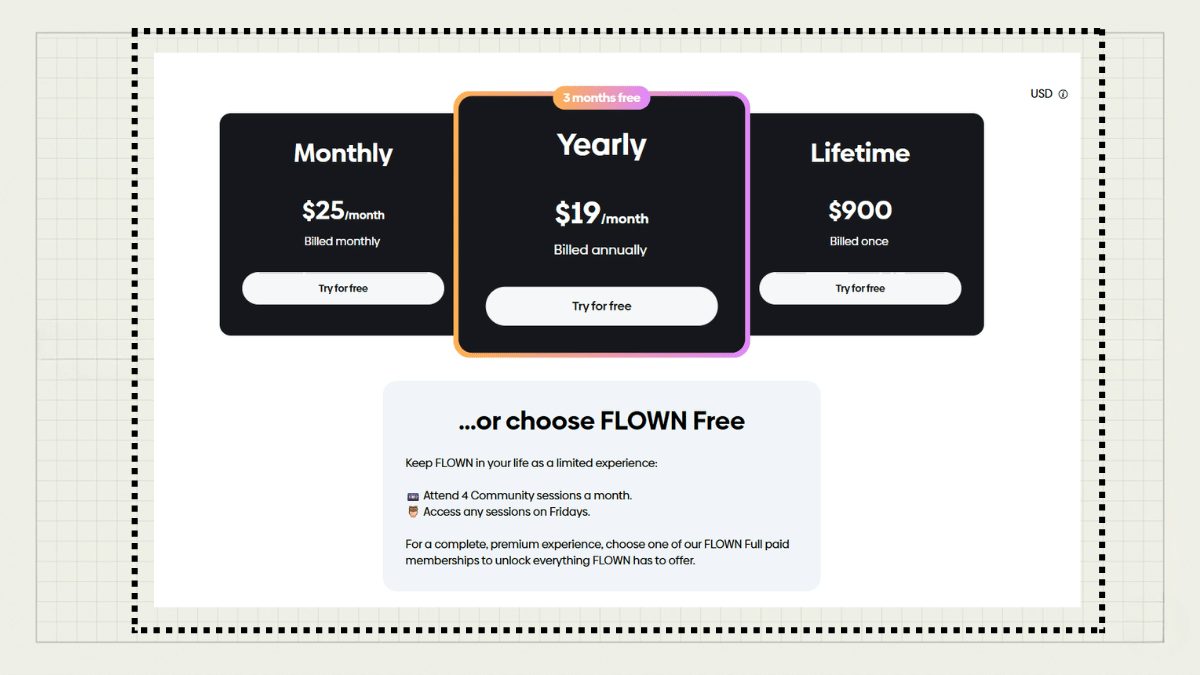
It also offers a 30-day free trial without requiring credit card details upfront, which lowers the barrier to trying it. Fridays are free as well, which gives users a way to continue accessing some of the platform even if they do not subscribe right away.
Compared with cheaper alternatives, FLOWN costs more, but that higher price reflects the broader range of session types, resources, and community features included in the platform.
Is there a community around FLOWN?
Yes, community is a meaningful part of the platform. Unlike tools that focus almost entirely on the session itself, FLOWN is designed to create a sense of continuity between sessions through recurring members, coaches, events, and group features.
Members can begin to recognize familiar faces over time, and badges help signal experience level across the platform. There is also an online community space where members can stay connected outside sessions.
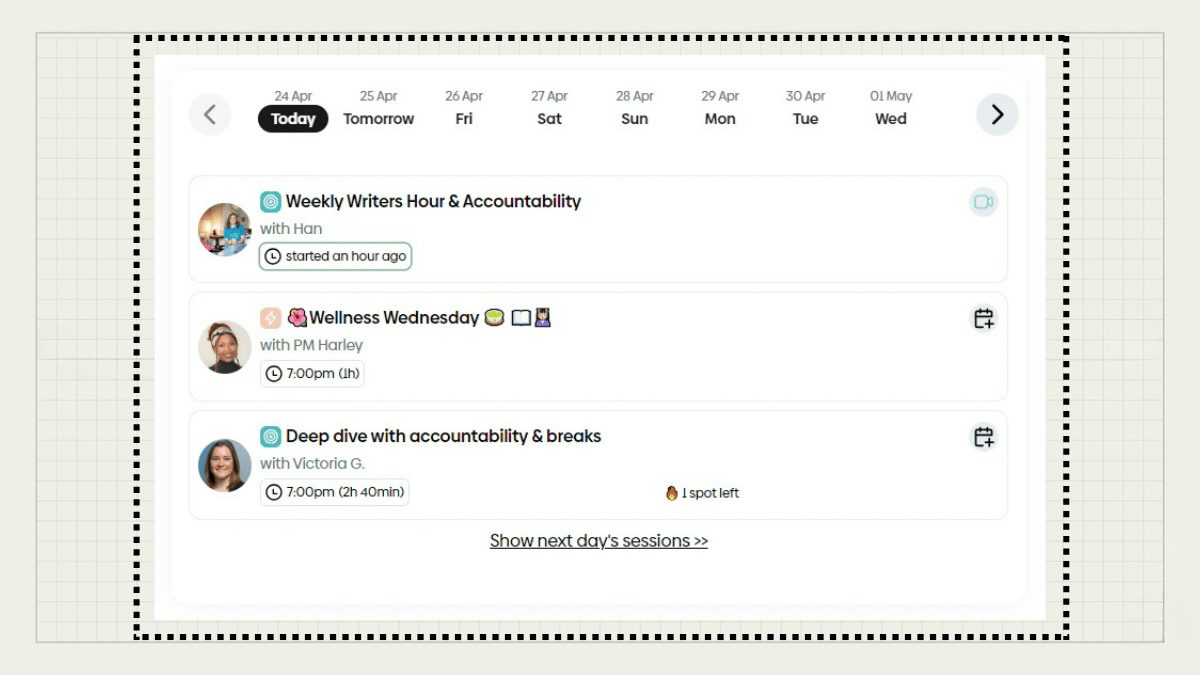
In addition to standard focus sessions, FLOWN includes seasonal challenges and optional activities such as breathwork, yoga, creativity sessions, and planning events. Members can also join or create their own themed sessions around specific interests or goals, including writing, reading, decluttering, or wellness.
This makes the platform more community-oriented than a simple coworking tool, which will appeal to some users but may feel like more than necessary for people who only want quick self-accountability.
Can FLOWN help me with personal development?
Yes, FLOWN goes beyond virtual coworking and includes a wider set of resources tied to focus, planning, and wellbeing. That includes things like meditation (like this flow state meditation), journaling, breathwork, yoga, and specialist workshops.
There is also on-demand content on topics such as procrastination, ADHD, and deep work, along with downloadable planners, tools, and practical resources. For users who want support beyond the live sessions themselves, this adds another layer of value.
FLOWN also offers 1-to-1 productivity coaching and group accountability programs tailored to specific goals or types of work, such as writing, academic goals, or entrepreneurship.
Overall, FLOWN is best understood as a more rounded focus platform rather than just an accountability app or body doubling app. That broader offer is one of its strengths, but it also means it may be more than some users actually need.
Who this focusmate alternative is best for and not ideal for
Best for: people who want more than basic body doubling and are looking for a fuller focus platform with facilitated sessions, flexible formats, community, and extra support around productivity and wellbeing.
Not ideal for: people who want the cheapest possible accountability tool or a very simple one-to-one setup. If you do not need workshops, community features, or additional resources, a more stripped-back platform may be a better fit.
4. Focusmate alternative: Flow Club
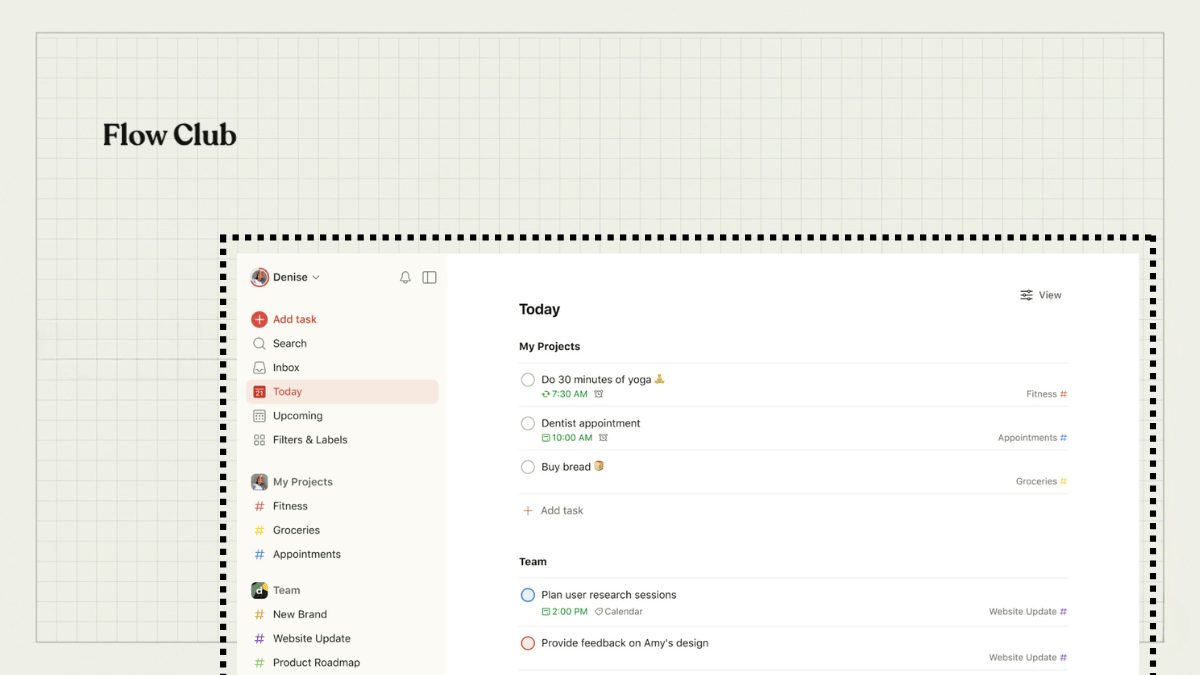
Flow Club at a glance
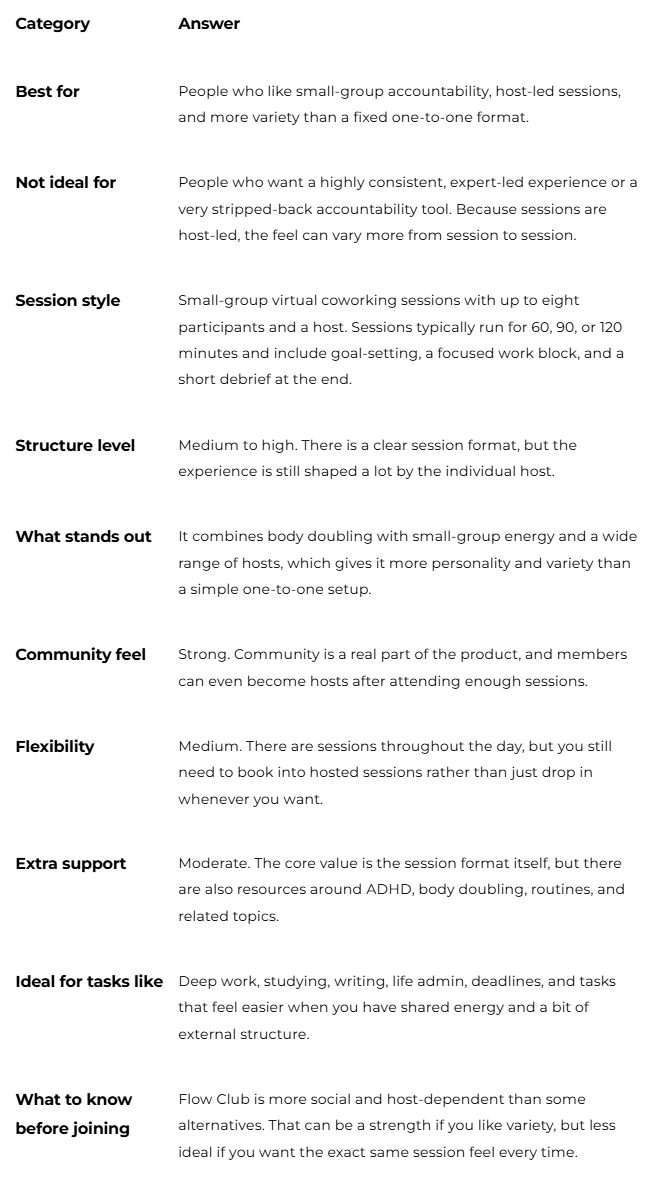
Flow Club’s member-led virtual co-working sessions mean every flow feels different, and the onboarding to get there was easy to use and helped me understand the platform quickly.
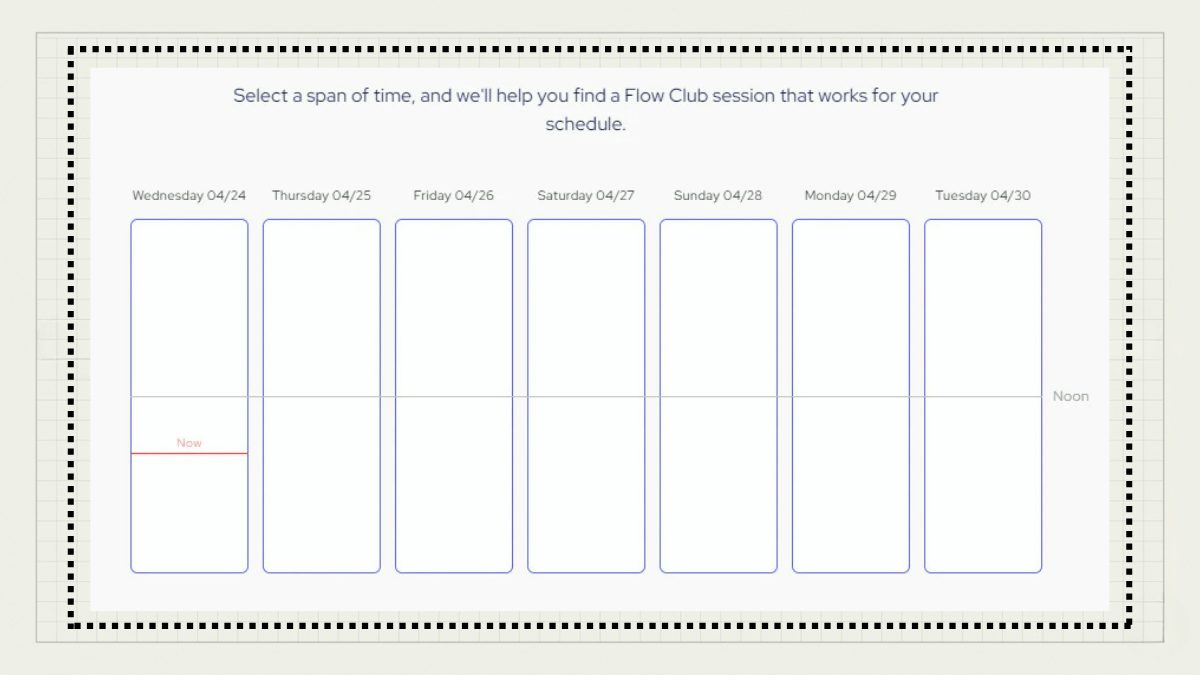
How does Flow Club work?
Flow Club hosts moderated work sessions that focus on achieving a state of "flow," using music and timing to encourage immersion in tasks.
The flow club sessions are uniquely designed by the hosts and vary in length from 30 to 190 minutes, with a clear description of how they intend to run the session below. The hosts are other members, and the style of the flow varies depending on who you work with. Some clubs are chat-only, where you can share your intentions in the chat rather than having to speak out loud on the video.
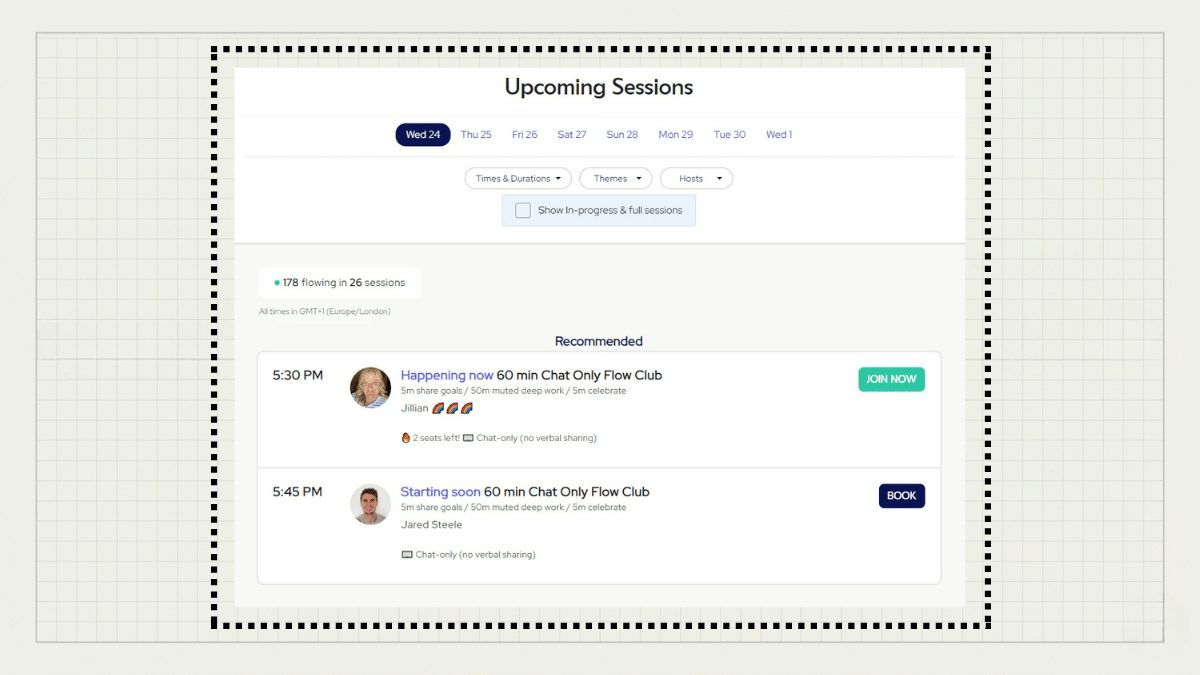
Although the variety is nice, not being able to access a consistent and expertly facilitated session like you can with other Focumate alternatives was a drawback. It made me feel like this was more of a streaming platform than a purpose-built tool and community for modern workers.
I found the website slightly confusing to navigate at times, and it was difficult to find my way back to the onboarding checklist. Additionally, there was no way to automate booking multiple sessions in advance, which I found inconvenient. If you follow a specific host, you can book their sessions regularly, but, disappointingly, planning out a schedule for yourself simply wasn't an option.
Flow Club main features
Host-led group sessions: Each session is run by a host who guides the check-in, work block, and debrief.
Small group format: Sessions have up to eight participants, which keeps the experience more personal than a large open room.
Book-ahead schedule: The platform is built around a predictable schedule so you can reserve sessions in advance and create routines.
Public goal-setting: You share what you plan to do at the start, which adds accountability through the group.
Optional focus music: Hosts can play work-friendly music to help signal that it is time to focus.
How much does Flow Club cost?
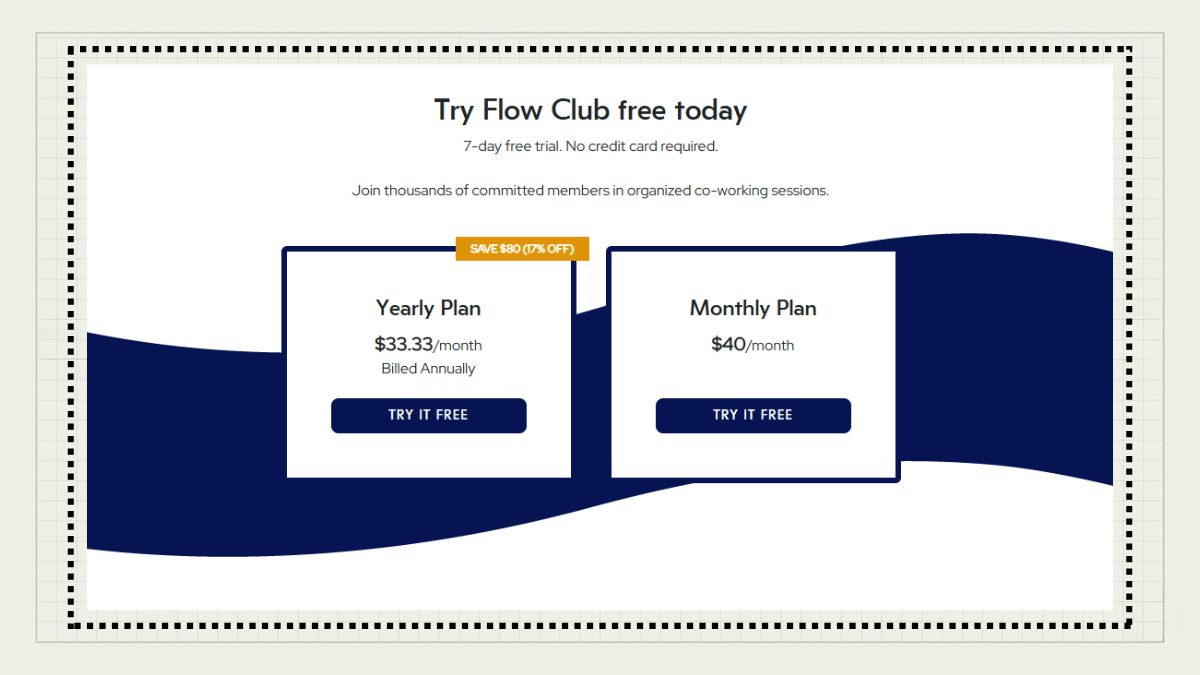
The cost of the platform is a bit expensive compared to other flow sites, but there is a 7-day free trial, and you can choose a plan that is either a monthly cost of $40, or $33.33 per month when billed annually.
Is there a community around Flow Club?
The community element provided by Flow Club is its best quality, and I appreciated the detailed descriptions of the hosts.
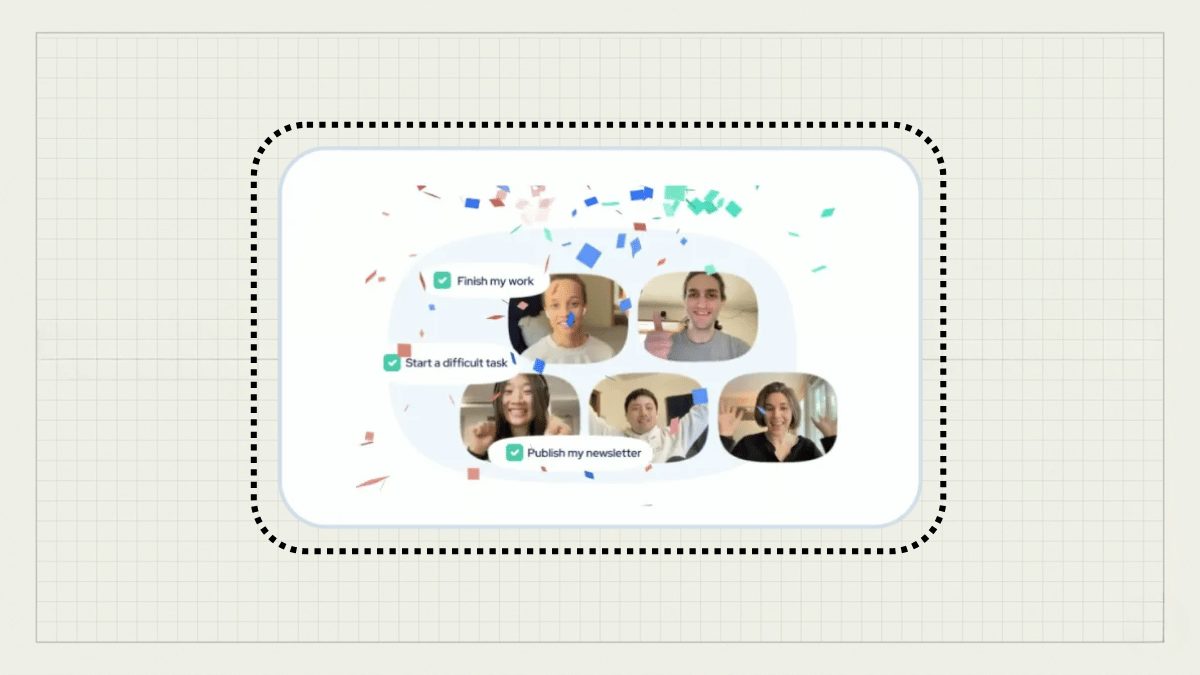
The platform fosters a sense of accountability, and I can imagine regularly joining a specific club and getting to know my group could help me tackle a particular project.
Can Flow Club help with personal development?
In terms of personal development, the blog on the platform has some interesting pieces and specific guidance for how you could use Flow Club.
For example, there is a morning routine club, and if you are in-house, you can set up Flow Club for your company using their Slack integration to suggest co-working clubs with your team.
But the resources simply weren't as comprehensive and deep as those offered by other Focusmate alternatives. Overall, I found Flow Club to be a good productivity app, building my focus bubble, and getting things done!
Best for and not ideal for
Best for: people who like small-group accountability, varied session styles, and a more social experience. Flow Club is a good fit if you want body doubling with a bit more personality and energy, and you enjoy choosing between different hosts, formats, and session vibes.
Not ideal for: people who want a highly consistent experience or a more polished, purpose-built focus platform. Because sessions depend a lot on the host, it may be less appealing if you prefer predictable structure, easier scheduling, or more expert-led support.
Are there any virtual coworking spaces free of charge?
Flown offers a 30-day free trial period for their virtual coworking platform, which includes daily group co-working sessions, virtual workshops, and access to a community of remote workers. As well as the trial, FLOWN is open to anyone on a Friday, so you can access Flocks for free forever.
Focusmate allows you to take part in three one-to-one focus sessions per week for as long as you like, but you’ll have to pay to use it more regularly.
Caveday offers a 14-day trial period, although users are required to input their credit or debit card details to try it.
Flow Club offers a 7-day free trial period for their virtual coworking platform, which you can take part in without having to enter your credit card details.
Try FLOWN for free today
Whilst I enjoyed Caveday’s separation of being inside and outside the cave, and liked the idea of connecting with the same group over time with Flow Club or building 1-to-1 relationships with Focusmate, the community aspect of FLOWN is so supportive and welcoming I can’t help coming back again and again.
FLOWN focus sessions are effective for keeping me focused, and I love the overall ethos of balancing work, mindfulness and wonderment to keep me in a consistently productive state of mind.
FAQ about best Focusmate alternatives
The cheapest paid Focusmate alternative in this group is FLOWN, with paid plans starting at $19/month billed annually or $25/month billed monthly.
Caveday starts at $35/month billed quarterly, while Flow Club costs $40/month or $33.33/month billed annually. Prices can change, so it is worth checking the latest plans before publishing.
Yes. FLOWN offers a free member option alongside its paid plans, and Flow Club offers a free trial. Caveday also offers a 14-day free trial, but its standard membership is paid after that.
Caveday is the strongest Focusmate alternative for guided deep work. Its core product is built around facilitator-led live sessions, weekly planning workshops, and a more structured “focus ritual” than simple one-to-one body doubling.
If you mean the broadest built-in community layer, FLOWN is the strongest answer.
It includes community sessions, lets members host their own sessions after enough participation, and mixes live sessions with a wider community structure beyond the work block itself.
Flow Club is also very strong if you want a more social, host-led small-group feel.
Flow Club is the clearest small-group alternative to Focusmate. Its sessions are host-led, capped at small group sizes, and built around shared goal-setting, focused work, and a short check-out at the end.
FLOWN is the most flexible option here because it combines scheduled sessions with 24/7 Drop-Ins and a Focus Room for more on-demand use. That makes it easier to use on unpredictable workdays than platforms that depend more heavily on fixed hosted sessions.
FLOWN is the best fit if you want more than a simple accountability session. It combines live focus sessions with on-demand content, different session formats, and a broader platform built around body doubling, focus support, and community.
Caveday is also a strong option if what you want is more structure, planning, and guided deep work.