Emotional masking: What it is, signs, and how to stop

By FLOWN
•
Mar 09, 2026
Emotional masking is one of those “skills” that looks like maturity from the outside and feels like unpaid overtime on the inside.
You read the room, smooth the edges, keep the face calm, say the right thing at the right time… Then you wonder why you’re weirdly drained after a conversation that was supposed to be like any other.
If you’ve ever thought that you can ‘do people’ but at a serious cost, you should keep on reading.
7 key takeaways from this article
Emotional masking is the habit of editing what you show so you match what a situation seems to demand.
Masking is not the same as politeness. It is heavier because it involves constant self-monitoring, performance pressure, and emotional dissonance, which can become exhausting over time.
For autistic people, masking often shows up as camouflaging made of three parts: compensation, masking traits, and assimilation. Tools like the CAT-Q exist because this is common enough to measure and study.
The impact of masking on mental health is real. Research links higher camouflaging with higher anxiety, depression, stress, and lower well-being, plus a higher risk of burnout and feeling less like yourself over time.
Unmasking works best as a small, safe practice. Pick one safe context, loosen one habit, and replace hiding with clear signaling so you reduce the cost without creating new risk.
Body doubling is a practical shortcut because it gives you a supportive social presence without social performance. Sharing space with a non-judgmental community and facilitators helps people start tasks, stay focused, and feel safer being more real.
Mask vs. unmask: What emotional masking (and camouflaging) actually means
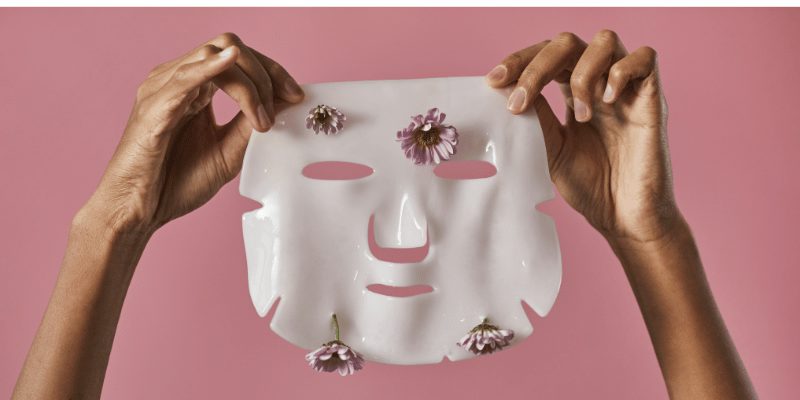
Masking is the habit of hiding, filtering, or “editing” your real emotional response so you match what a situation seems to demand.
In research, overlapping terms include expressive suppression (hiding outward signs of emotion) and broader emotion regulation strategies that change what you show, not necessarily what you feel.
Unmasking isn’t saying everything you feel, as TikTok gurus would have you believe.
It’s reducing that constant self-editing (selectively, in safer contexts) so your inner state and outer behavior aren’t forever at war.
Masking helps you fit in now. Unmasking helps you stay well long-term.
Why emotional masking isn’t just “being polite”
Politeness is usually light-touch and optional. You can choose a kinder tone without rewriting your whole personality.
Masking is heavier. It tends to involve:
Continuous monitoring (What’s my face doing? Am I reacting correctly? Did that come out weird?)
Performance pressure (Keep it together, look fine, don’t show confusion, don’t seem too much)
Emotional dissonance (showing one thing while feeling another)
That last piece matters because research on emotional labor calls out “surface acting” (suppressing emotions to meet expectations), as particularly linked with emotional exhaustion over time.
Where autism fits (autistic masking in autistic life)
In the autism research world, masking is often discussed as social camouflaging. These involve strategies autistic people use to blend into social expectations.
It’s recognized enough that researchers created a dedicated measure, the Camouflaging Autistic Traits Questionnaire (CAT-Q), based on autistic adults’ lived experiences.
That’s why you’ll see emotional masking overlap with terms like:
camouflaging
compensation (finding workarounds to appear typical)
assimilation (trying to blend into social norms)
All are different angles on the same core idea: the mask is effort.
10 common signs of emotional masking

You feel oddly exhausted after normal social time, even when nothing bad happens.
You rehearse conversations in advance (or replay them after) to check if you acted right.
You monitor your face, voice, and body language like you’re running a performance.
You automatically smile, laugh, nod, or agree to keep things smooth.
You hide stress, confusion, or discomfort until you’re alone, then it hits you all at once.
You copy other people’s tone, slang, reactions, or energy to blend in.
You suppress natural behaviors (fidgeting, stimming, taking breaks) because they feel too noticeable.
You say you’re fine by default, even when you’re not, because it feels safer or easier.
You feel like different people in different settings. There’s work you, family you, social you.
You crash after sustained masking (irritability, shutdown, numbness, or needing hours/days to recover).
What does masking look like? Real-life examples of people who mask
Masking doesn’t always look dramatic. Most of the time, it looks like someone is functioning normally, even if they fit somewhere in the neurodiverse spectrum.
An emotional mask is a mask worn well.
If you’ve watched Game of Thrones, you may already have an image of this smooth wear in your head. The Faceless Men are a sharp metaphor for masking.

That’s the point.
What masking can look like in everyday life (non-autism examples)
These are common people masking patterns that show up in workplaces, friendships, families, and dating:
“I’m fine” autopilot: Voice is steady, face is calm, but you’re actually stressed, hurt, or overwhelmed.
Neutral-face mode: You suppress visible emotion so no one can “read” you, especially in tense environments. (This overlaps with what research calls expressive suppression.)
Forced positivity: You keep the mood up so nobody asks questions (laughing, smiling, reassuring)… even when you’re running on empty.
Social scripting: You rely on practiced phrases (“That’s interesting,” “Makes sense,” “Totally”) to avoid revealing confusion, disagreement, or fatigue.
Instant recovery performance: Something hits you emotionally, but you snap back fast so you don’t look sensitive even for a bit.
A useful gut-check: If you regularly need recovery time after being on, that can be a sign you’re masking.
What autistic masking can look like (autistic people and social camouflaging)
In autism spectrum disorder (ASD) contexts, autistic masking often includes deliberate strategies aimed at passing as “typical”, especially in social settings.
Researchers describe social camouflaging as behaviors used to assimilate with social environments. So they study its predictors and consequences.
Here are examples of what masking can look like for autistic people:
Practicing eye contact (or timing it) even when it’s uncomfortable
Copying gestures, expressions, or tone to match the other person
Rehearsing conversations before they happen and replaying them after
Suppressing stimming or replacing it with more acceptable fidgets
Forcing facial expressions that don’t come naturally (smiling at the right moments, nodding on cue)
Over-explaining or over-agreeing to avoid conflict or judgment
This is not about good or bad behavior. Don’t ever let yourself think that way!
It’s a coping mechanism that can be adaptive in the short term, and you’re not the one to blame.
Autism and masking in autistic life

When this topic comes up in autism, you’ll often hear a slightly different word than “emotional masking”. It’s camouflaging (or social camouflaging).
Same basic idea, though. People mask parts of themselves to fit expectations.
Still, the autism research lens is more specific. It looks at the real strategies autistic people use to “pass” in social settings, and what that effort does to wellbeing over time.
Two important points that keep popping up in research:
Autistic masking can be conscious or automatic. As reported by Autism UK, autistic people describe it as something they learned over time because it felt safer or more rewarding.
Masking in autistic life is often a coping mechanism, not a personality choice. It can help someone get through school, work, relationships, and “cross-neurotype” interactions (autistic + non-autistic social dynamics), but it can also be cognitively expensive and draining, according to this 2021 study.
Autism spectrum and autism spectrum disorder (ASD): Where masking fits
In research, camouflaging refers to strategies autistic people use to adapt to a predominantly non-autistic social environment by modifying their natural social behavior.
This way, they compensate for social difficulties (finding workarounds), mask autistic traits (hiding aspects of autistic presentation), and assimilate (actively try to blend into uncomfortable social situations).
This is formalized in the Camouflaging Autistic Traits Questionnaire (CAT-Q), which was built from autistic adults’ lived experiences and validated as a 25-item measure with those three factors.
Why masking can affect access to an autism diagnosis
Masking can make someone appear “fine” in brief, structured interactions while the internal load stays invisible.
Research suggests camouflaging is linked with later age at diagnosis.
Meaning some people may be missed or recognized later because their outward presentation doesn’t match the stereotype clinicians expect.
Gender and late recognition (why some autistic people mask more)
Across studies, autistic females report higher camouflaging than males on parts of the CAT-Q. Researchers have discussed camouflaging as one possible contributor to missed or later diagnosis in girls and women (without claiming it explains everything).
Different social expectations can shape how strongly someone learns to mask and how long it takes for anyone to notice what’s really going on.
Impact of masking on mental health: What it can cost over time

Masking requires you to run two tracks at once: the real emotion you’re having, and the acceptable version you’re showing.
That constant monitoring is effort and effort adds up.
In autism research (where masking is often studied as camouflaging), a 2024 systematic review and meta-analysis found camouflaging is associated with higher anxiety, depression, and social anxiety, and lower mental wellbeing in autistic people.
Another 2024 study found that people who camouflaged more reported poorer mental health (anxiety, depression, stress) and importantly, in their analysis camouflaging related to poor mental health even when autistic traits were also considered.
There’s also the identity piece.
High masking levels have been linked with authenticity challenges (feeling less like yourself) and burnout in autistic people. And if your mask is mostly emotional suppression, that overlaps with what emotion-regulation research calls expressive suppression.
Here’s the simple list of possible mental health issues derived from masking:
More chronic stress load
Higher anxiety and social anxiety symptoms (and even paralyzing anxiety)
More depressive symptoms/lower overall well-being
Emotional exhaustion (especially when you’re faking or suppressing emotions to meet expectations)
Feeling less authentic or split from yourself
More shutdown/crash cycles after social demand
In autistic people, a potential endpoint can be autistic burnout. It’s conceptualized as chronic life stress + a mismatch between expectations and abilities without adequate supports
Unmask: how to unmask safely (without blowing up your life) in 5 simple steps
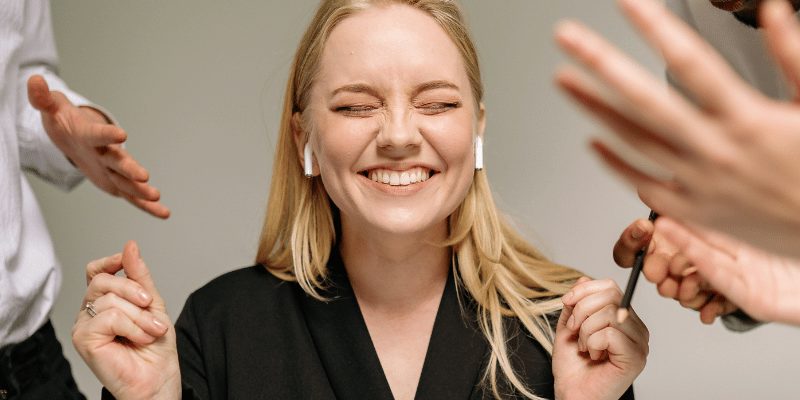
Unmasking works best when you treat it like skill-building, not a personality overhaul.
Small, safe reps beat big, dramatic announcements.
#1 Pick “selective unmasking,” not “full honesty”
Unmasking is choosing where you stop performing.
Try this:
Choose 1 safe context (home, one friend, one online space, one session).
Choose 1 mask to loosen (forced smiling, instant agreeing, over-explaining).
Choose 1 boundary that protects you (time limit, exit line, camera-off breaks).
This keeps unmasking practical and safe.
#2 Do a quick “mask audit” (so you stop guessing)
Most people can’t unmask because they can’t see what they’re doing. For one week, notice your patterns like a curious scientist, not a judge.
Track these 3 things (takes 60 seconds):
What did I hide or “edit” today?
What triggered it?
What did it cost me (stress, fatigue, resentment, shutdown)?
This matters because a big chunk of masking overlaps with emotion suppression. This suppression-heavy coping tends to correlate with worse well-being compared to healthier strategies like reappraisal.
#3 Run tiny “unmask experiments” (one change at a time)
If you unmask everywhere, you’ll feel exposed. If you unmask nowhere, you’ll feel erased. The sweet spot is a small test.
Pick one:
Replace “I’m fine” with: “I’m a bit overloaded, but I’m okay.”
Pause before answering (2 seconds). No apology.
Say “let me think” instead of performing instant confidence.
Drop one social extra (forced laugh, extra enthusiasm, over-nodding).
Then ask: Did anything bad happen? Or did the world… keep spinning?
4) Swap “hiding” for “signaling” (low-drama honesty)
A lot of people mask because the only alternative they can imagine is an emotional monologue. There’s a middle lane.
Signal what’s happening and what you need, briefly.
Use these plug-and-play lines:
“My brain is a bit noisy right now, can we slow down?”
“I want to answer well. Give me a minute.”
“I’m listening, I’m just processing.”
“I’m at capacity today. I’m going to be quieter.”
This is also where “better emotion regulation” beats suppression.
The research pattern is pretty consistent: reappraisal (changing how you interpret a situation) tends to be linked with better outcomes than default suppression.
5) Use body doubling as a “safe room” to unmask and still function
Body doubling works because it gives you the benefits of social presence without the social performance.
Here’s the simple mechanism. The presence of another person can boost follow-through (psychology calls this social facilitation). Performance can improve with others around, especially for straightforward tasks.
So, with any good body doubling app on the market:
You share physical or virtual space with strangers who aren’t there to evaluate you.
They’re dealing with the same stuff (ADHD task paralysis, anxiety, social pressure, impostor syndrome in the workplace), so the culture naturally shifts toward “no judgment philosophy.”
In facilitated sessions, you can also open up in a structured way, because the format makes space for it (without turning it into therapy).
Practical setup (we keep it stupid-simple):
Choose 1 task.
Say it out loud at the start (“I’m writing the first paragraph,” “I’m doing the dishes,” “I’m sending the email”).
Work in short sprints (25 minutes is plenty).
End with a 10-second wrap: “Done/next step.”
That last part matters: unmasking sticks when it’s paired with completion, not just self-expression.
If unmasking spikes panic, shame, or shutdown, take that as data. It may mean you need a smaller step, a safer setting, or support from someone neurodiversity-informed.
Practical support: how to help autistic people and other people who mask
Believe the cost. If someone says “that meeting wiped me out,” don’t argue with appearances. Camouflaging/masking is linked with worse mental health outcomes in autistic people, so making it “safe to be real” matters.
Lead with non-judgement. The fastest way to reduce masking is a relationship where people don’t get punished for being honest.
Ask, don’t guess. “Do you want advice or just listening?” and “What would help right now?” keep support practical (and respectful).
Make communication explicit. Clear roles, direct language, and checking understanding beat hinting and “reading between the lines.”
Offer information in the easiest format. Written follow-ups, simple summaries, and “here are the next 3 steps” reduce stress and confusion.
Stop policing social signals. Don’t require eye contact, constant smiling, or fast replies—those rules force performance. (Judge output, not vibes.)
Build a sensory breathing room. Lower noise, softer lighting, allow headphones/ear defenders, and plan breaks.
Normalize reasonable adjustments at work. Practical options include written instructions, modified break schedules, flexible schedules, telework, and uninterrupted focus time.
Reduce performative norms. Make meetings more structured (agenda + purpose), make “camera off” acceptable, and don’t treat social events as mandatory. Pressure drives masking.
Point to support, not just “cope better.” Encourage access to support groups or one-to-one support when helpful. People do better with the right container.
Quick self-check tools (optional): a checklist you can actually use
Masking / camouflaging checklist (tick what you recognize)
You rehearse conversations (before) or replay them (after).
You copy other people’s tone, slang, facial expressions, or reactions to blend in.
You force social signals (smiling, nodding, eye contact) even when it feels unnatural.
You hide confusion and act like you get it to avoid looking incompetent.
You suppress stimming/fidgeting or swap it for something more acceptable.
You lean on social scripts (safe phrases, safe jokes) more than you speak naturally.
You over-agree or over-explain to avoid conflict or judgment.
You perform calm while your body is stressed (tight chest, clenched jaw, shallow breathing).
You feel like different versions of you show up in different settings (work you, social you, family you).
People describe you as “fine/composed/chill” even when it doesn’t match your inner experience.
Cost checklist (this is the part most people ignore)
After social time, work, or “being on,” you often:
crash hard and need hours (or days) to recover,
feel irritable, numb, or emotionally flat,
have a mask drop at home (shutdown, tears, scrolling, silence)
ruminate about what you said and how you came across,
feel disconnected from what you actually think or feel,
feel burned out even when life looks normal on paper
Higher camouflaging is consistently associated with poorer mental health outcomes like anxiety/depression and lower well-being in autistic people.
If you want something research-validated: CAT-Q quick pattern check
If you use the CAT-Q (Camouflaging Autistic Traits Questionnaire), don’t obsess over the total score. Look at which pattern shows up most:
Compensation: you use learned rules/scripts to “make up for” social difficulty
Masking: you actively hide traits or emotions to appear more typical
Assimilation: you force yourself through situations that don’t fit (and pay later)
That 3-part structure is the value of CAT-Q: it turns “I mask” into how you mask.
A validated short form (CATQ-SF) also exists if you want something quicker.
“Worth getting support” signals (not diagnosis, just a smart threshold)
masking is followed by shutdowns, panic, or big crashes
you’re avoiding life because the performance cost is too high
you feel chronically disconnected from yourself
you suspect autism/ADHD and want clarity with a neurodiversity-informed clinician
FAQ about emotional masking

Not always. Masking can be an adaptive coping mechanism in the short term, especially in environments where being visibly different isn’t safe.
The problem is chronic masking without recovery, because research on autistic camouflaging shows it’s associated with higher anxiety, depression, and social anxiety, and lower mental wellbeing.
No. Autistic masking varies a lot by person, context, and life experience. Some autistic people camouflage heavily, some do it lightly, and some don’t (or can’t) camouflage in a way that reads as “typical” to others.
Researchers measure this using tools like the CAT-Q, which treats camouflaging as three different things so it’s not a single on/off trait.
It can. A 2024 study found a relationship between camouflaging and later age at autism diagnosis, with a stronger link reported for females in their samples.
This doesn’t mean “masking causes late diagnosis” in every case. But it supports the very practical idea that outward presentation can hide internal struggle, especially in short assessments or structured settings.
Think of masking as one tactic. Camouflaging is the broader strategy set.
Don’t start with “I’m unmasking now.” Start with low-drama changes that reduce the need to perform, because reasonable adjustments tend to help wellbeing and work output, and many are low-cost.
Here are proven, practical moves:
Ask for clarity, not comfort. Request written instructions, clear priorities, and agendas. (This reduces the “read between the lines” pressure.)
Switch from “vibe work” to “output work.” Align on what “good” looks like (definition of done, deadlines, examples). Less mind-reading = less masking.
Build sensory recovery into the day. Headphones, quieter space, lighting tweaks, and planned breaks prevent overload that forces a mask.
Use signaling scripts (one sentence). “I’m processing, give me a minute,” or “I work best with written next steps.”
Choose your disclosure level. You can request adjustments without sharing your full story. Start with the adjustment that solves the problem.
Test one change for two weeks. If it helps, keep it. If it doesn’t, adjust. That’s unmasking in a way that protects your job and your nervous system.