ADHD cleaning checklist for overwhelmed brains

By FLOWN
•
Apr 07, 2026
Cleaning can feel weirdly hard with ADHD.
This ADHD cleaning checklist helps when the problem is not just the cleaning itself. It helps with starting, the sequencing, and the mental load that builds around it.
It also helps you get rid of that mess because it makes your ADHD even worse. There is solid science showing that when multiple stimuli are present, they compete for the brain’s capacity.
So, let’s dive into it and share the ADHD cleaning checklist that will help you start and finish ‘the damn thing’.
Why Cleaning Feels So Hard With ADHD

Cleaning requires a lot of skills that ADHD makes harder to access on demand.
You have to notice what needs doing, choose where to begin, ignore less important distractions, stay with the task, and keep track of what is finished and what is not.
All of it adds up (as you see in the sentence above!).
A pile of laundry is not just a pile of laundry. It is sorting, deciding, carrying, washing, drying, folding, putting away, remembering where you stopped if something interrupts you halfway through... Goddess gracious, you see?
When the brain already feels crowded, a simple task can dirty punch you into surrender.
It is task paralysis, task initiation, and time blindness
This is where a lot of shame creeps in, and it usually does not belong there.
Many men and women with ADHD are not avoiding cleaning because they do not care. They are stuck at the threshold.
Task initiation is hard when the first step is not obvious.
Task paralysis shows up when everything feels equally urgent, equally annoying, (or equally hard to begin).
Time blindness makes it worse because the brain struggles to judge how long something will take, so even a ten-minute reset can feel like a giant demand.
This is why we have to say that it’s not “just cleaning”. Nike’s line (Just do it!) won’t work here, despite how ridiculously simple cleaning may sound.
Sure, in theory, you just wipe the counter, load the dishwasher, and put the clothes away.
But for an adult with an ADHD diagnosis, it is a chain of decisions with lots of chances to get pulled off course. The checklist helps by removing some of that decision-making. It gives the task a shape. It gives the brain a place to start.
ADHD cleaning checklist that actually helps
This checklist is built in layers, so the brain does not have to solve the whole house at once.
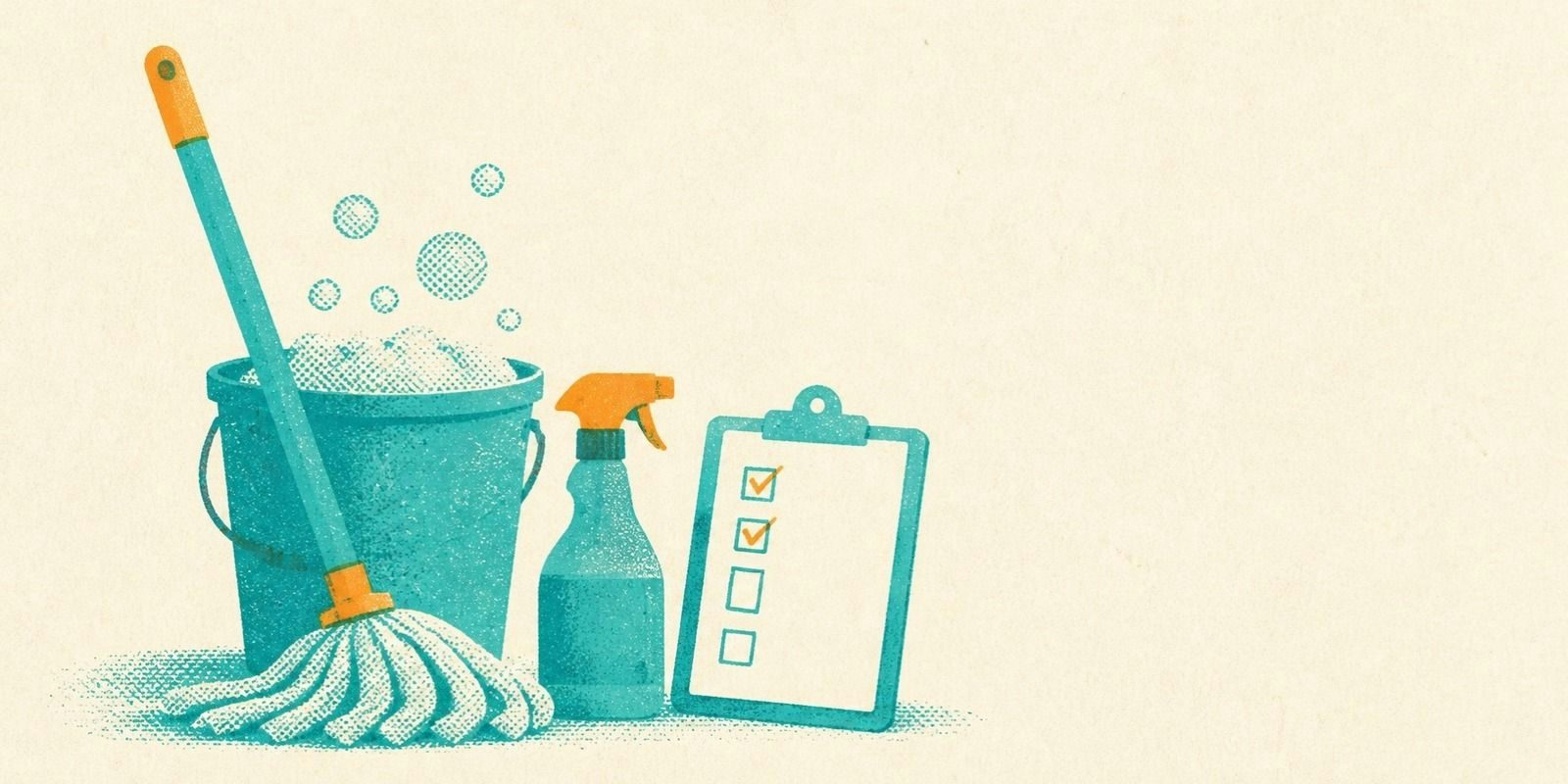
We included everything. A downloadable image that you can attach to your computer, as well as a copy/paste table that you can save on your phone.
Start with the first table when things feel bad. Use the daily table to stop the mess from snowballing. Use the weekly and monthly tables to keep the house functional without trying to clean everything all the time.
Before you start
Use these four rules with any part of the checklist:
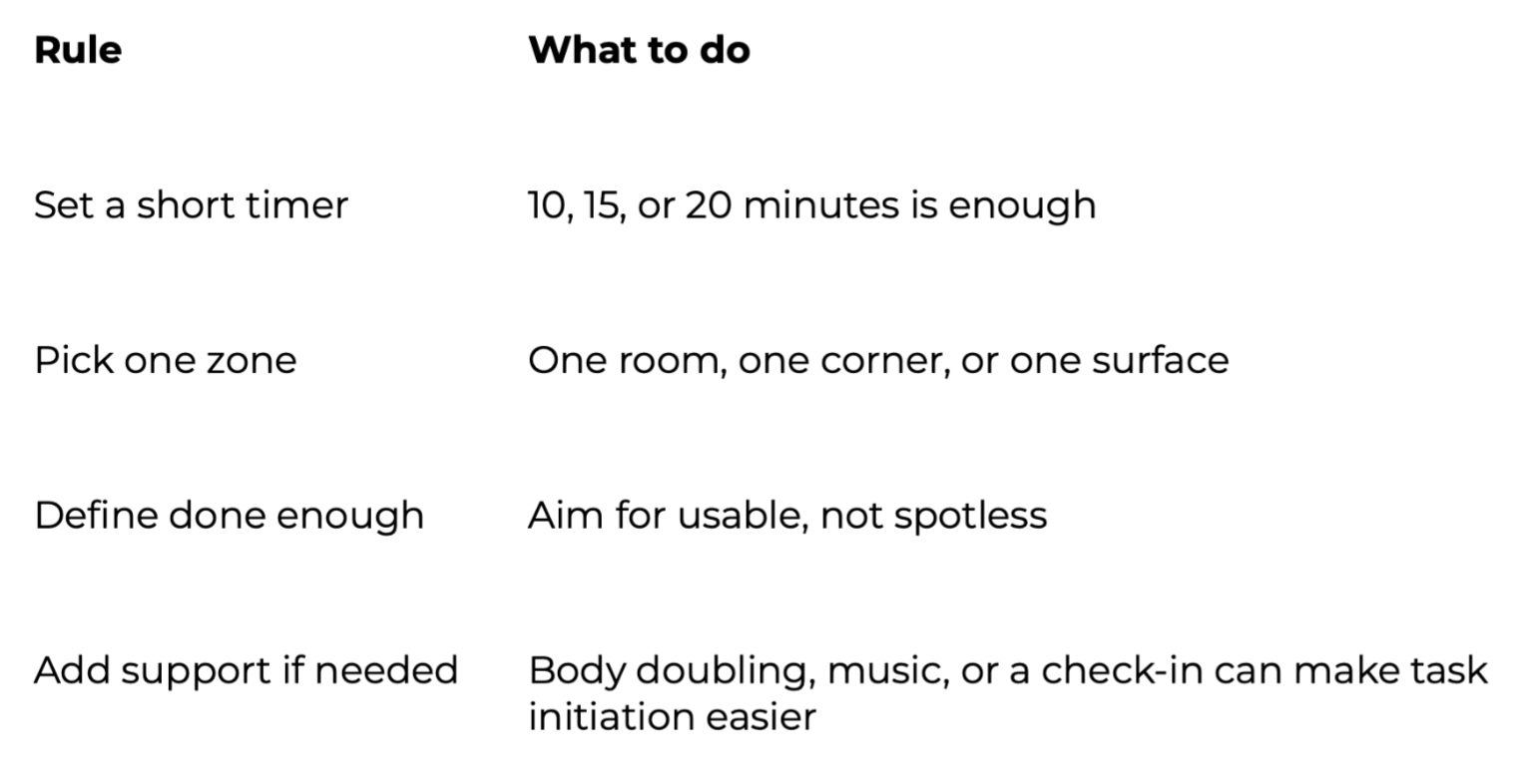
#1 Start here when everything feels overwhelming
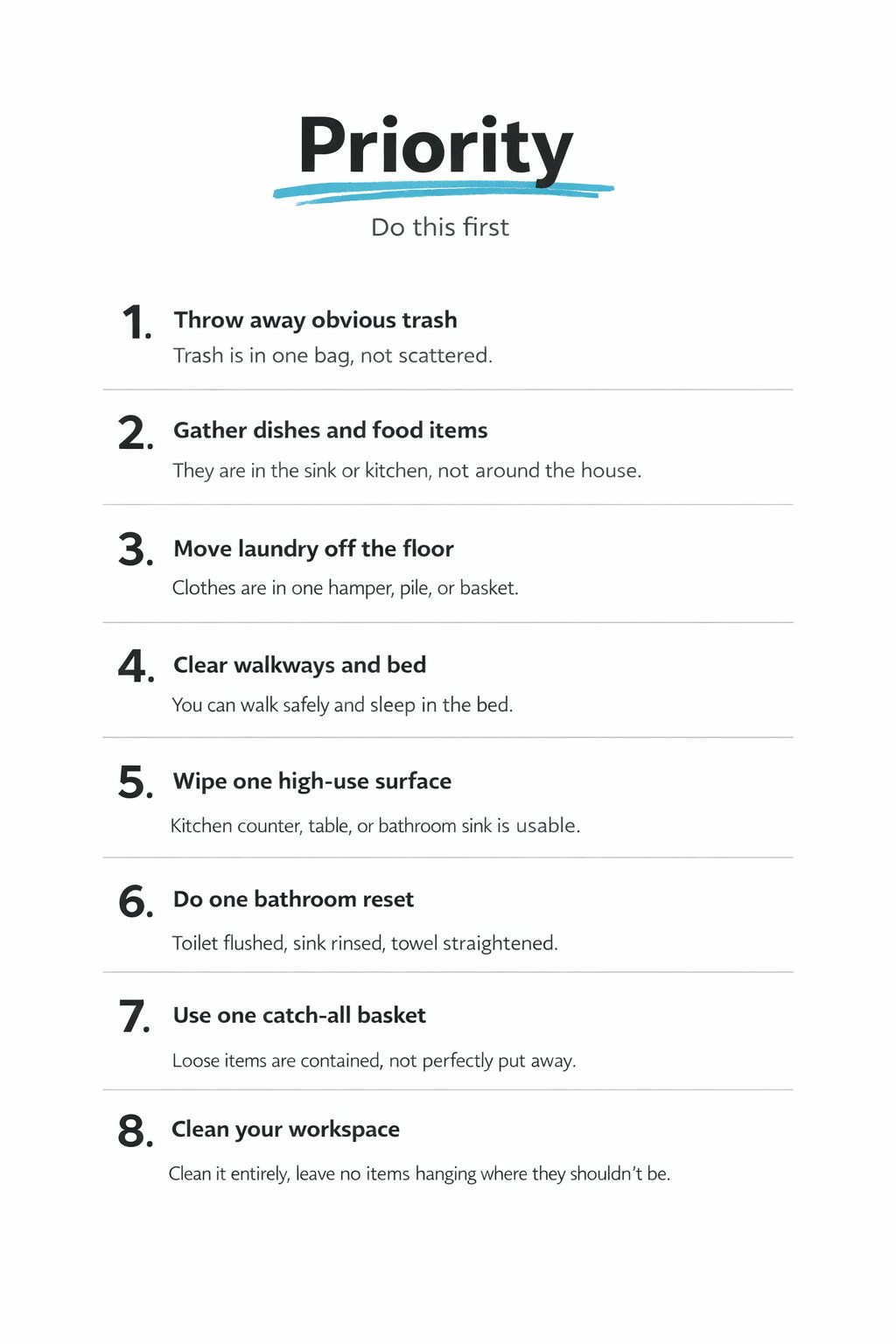
This is the rescue checklist. It is for the days when the space feels too far gone and the brain freezes.
This order in the cleaning checklist is deliberate for your ADHD. Safety and sanitation come first. Visual calm comes after that. Perfect organization and your work area come last.
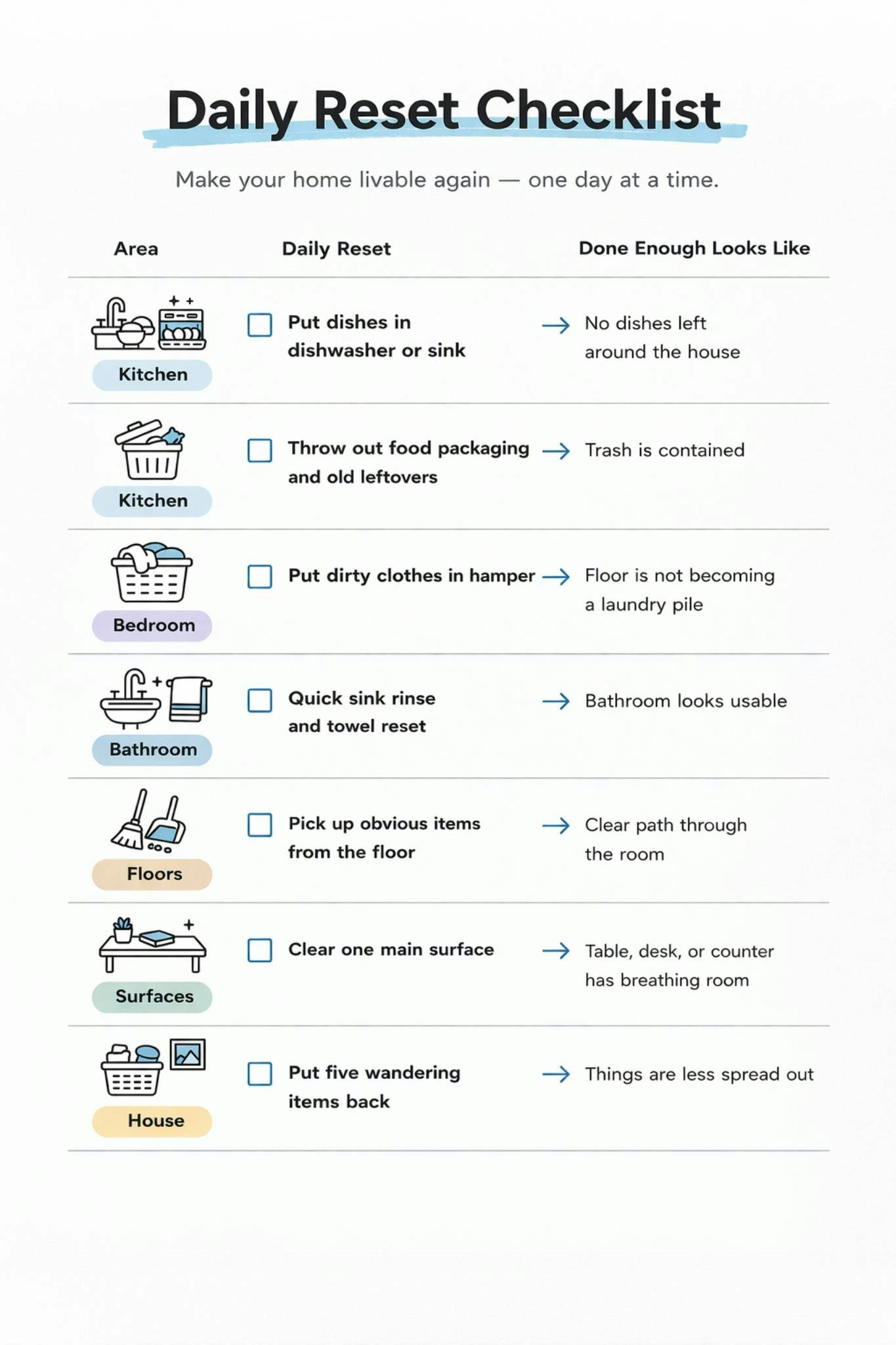
#2 Daily ADHD cleaning checklist
This is the small reset that keeps life from becoming a weekend recovery project.
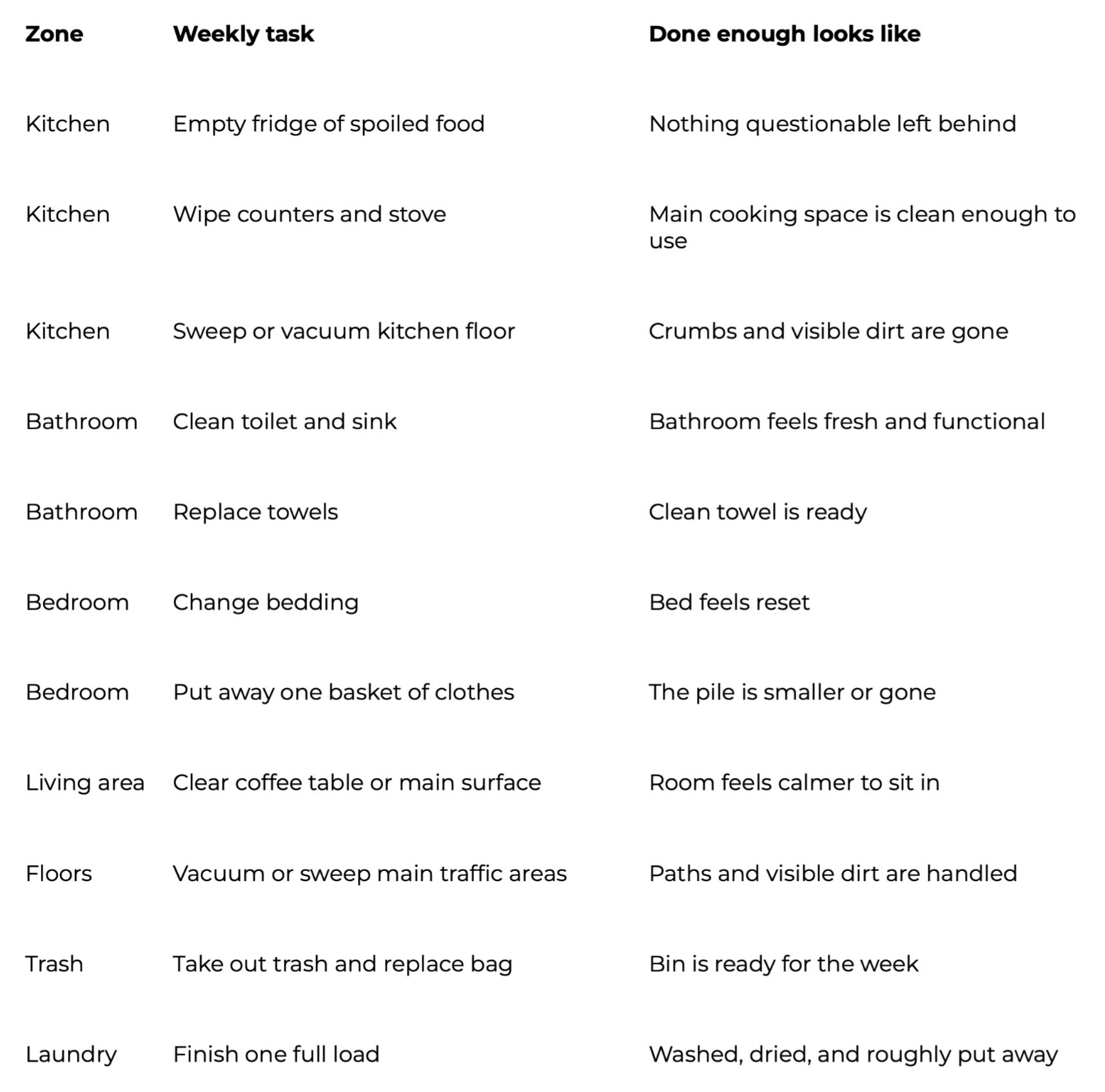
#3 Weekly ADHD cleaning checklist
This is the maintenance layer. It covers the important stuff without turning into an exhausting whole-house marathon.
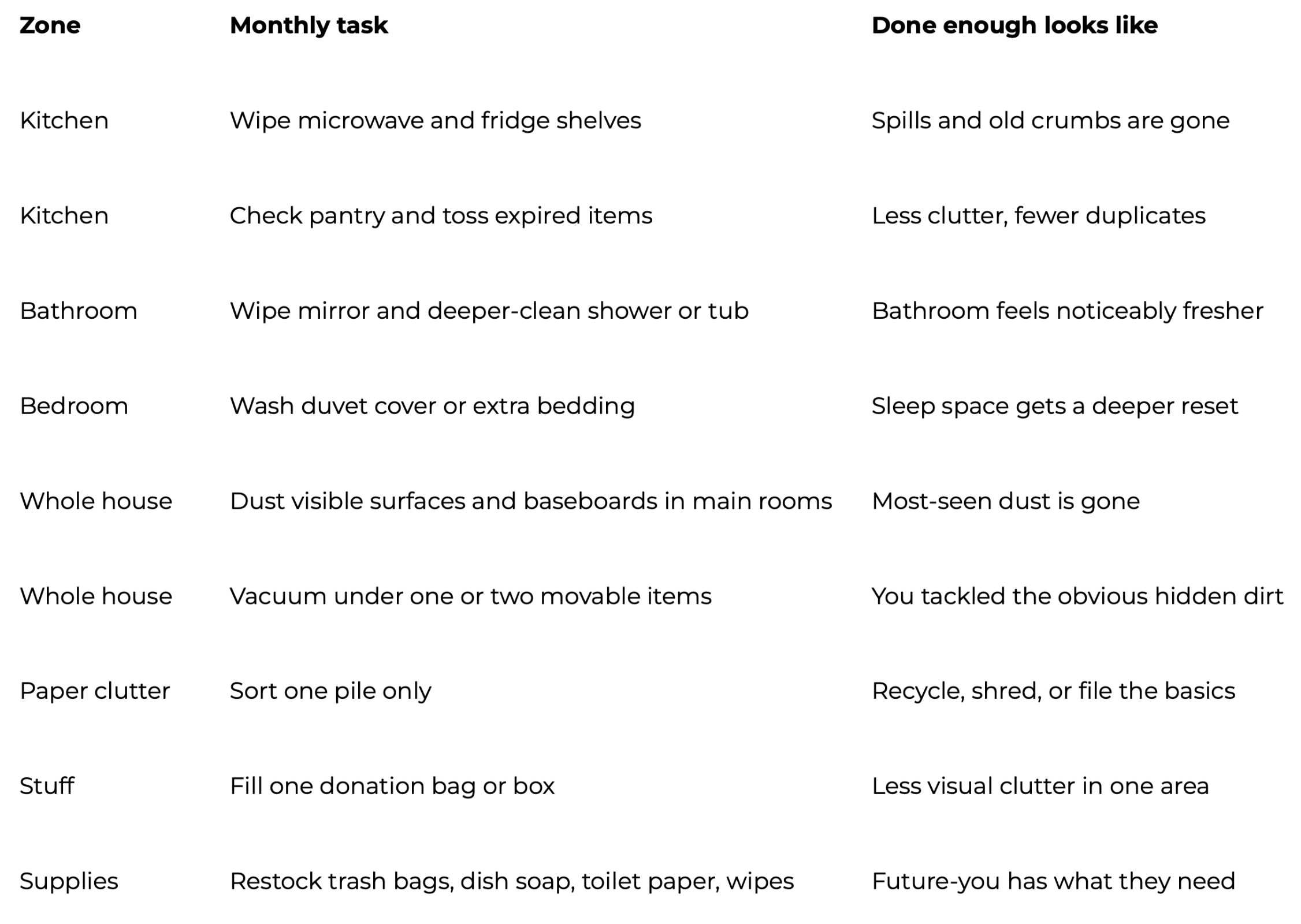
#4 Monthly ADHD cleaning checklist
This is the catch-up layer. It is for the things that matter, but do not need your attention every few days.
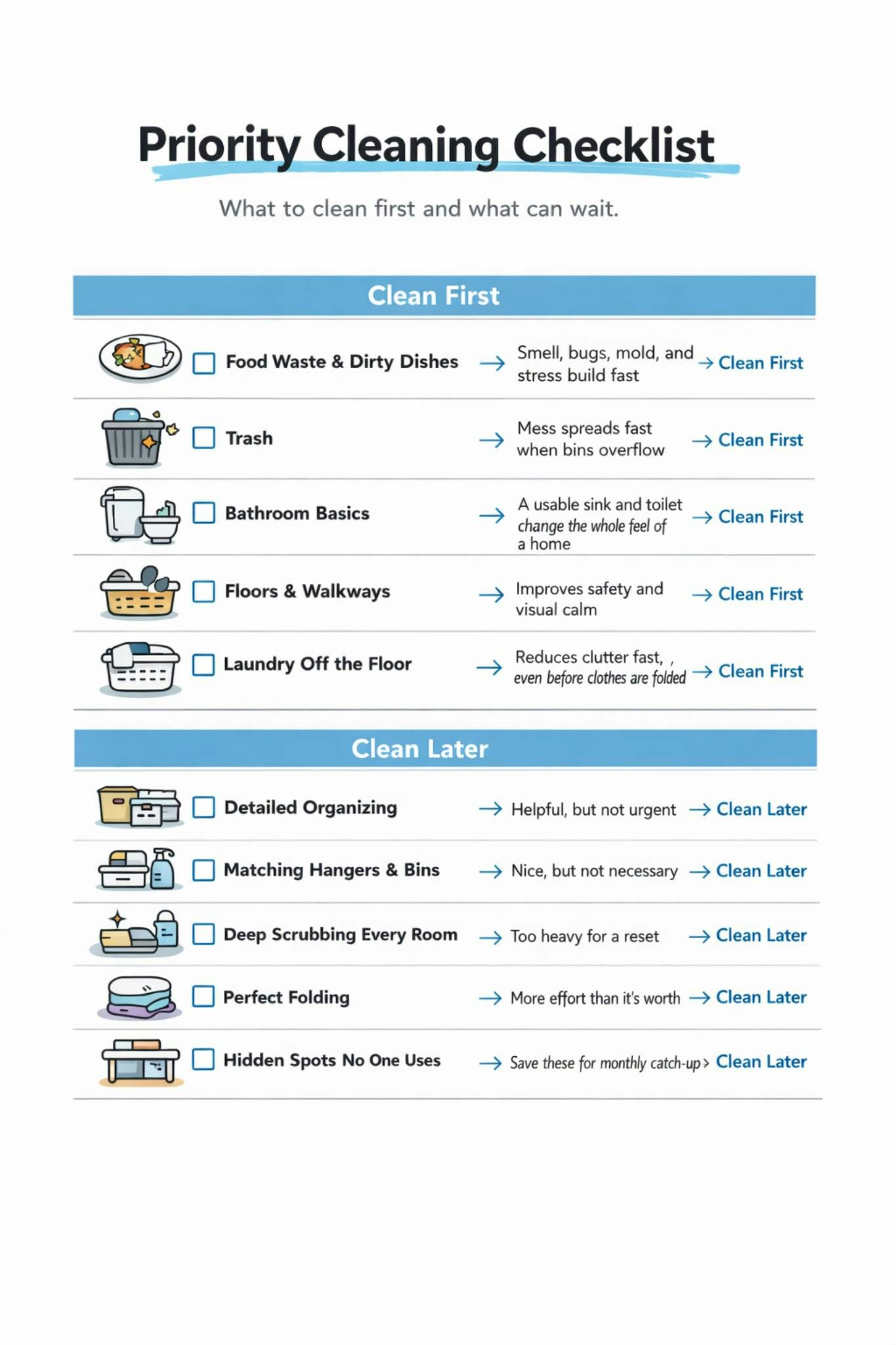
#5 What counts as important to clean in a house
This helps when your brain starts treating every mess as equally urgent.
#6 The ADHD-friendly rules that make the checklist usable
If you cannot start, set a 10-minute timer and do only the rescue checklist.
If you bounce between rooms, stay in one room until the timer ends.
If you get lost putting things away, use one catch-all basket and sort it later.
If you keep stopping, put on a body doubling session or text someone your plan.
If you feel behind and ashamed, return to the daily reset for a few days.
If you want to do everything, pick one table, not the whole article.
#7 The shortest version possible
For the days when even a full checklist feels like too much, start here:
throw away obvious trash
put dishes in the sink or dishwasher
put dirty clothes in the hamper or one laundry pile
clear a path on the floor so you can walk through the room easily
clear one main surface like the kitchen counter, dining table, or bedside table
reset your work space by removing cups, wrappers, random items, and anything not needed for work
put away or stack loose papers on your desk into one neat pile
close extra tabs and put chargers, notebooks, and work tools back in one place
make the bed or straighten the sofa if that is where clutter tends to collect
stop there if the space feels calmer and more usable
That gives you a slightly fuller reset without making it heavy.
The workspace part matters because visual clutter at a desk can make it even harder to get into a flow state and engage in deep work.
FAQ about ADHD cleaning checklist

A good ADHD cleaning checklist should focus on the things that make the biggest difference fastest.
That usually means trash, dishes, laundry off the floor, bathroom basics, clear walkways, and one main surface. It should also show what done enough looks like, so you do not get stuck chasing perfect.
Start with the smallest version of the job. Not the whole room. Not the whole house. Just the first layer: throw away trash, gather dishes, move laundry into one basket, and clear one path or one surface.
When the brain feels overloaded, a short reset works better than an ambitious plan.
Usually both, but they should do different jobs. A daily reset stops mess from building into something heavy and demoralizing.
A weekly reset handles the tasks that matter but do not need your attention every day. The daily list keeps things livable. The weekly list keeps things from sliding.
That is common, especially with tasks that have lots of small steps and loose ends. The easiest fix is to leave yourself a breadcrumb before you stop.
Put everything for that task in one visible place, write down the next step, or set a short timer to come back. It is much easier to restart when the task still has a shape.
Because cleaning is not one task. It is a chain of noticing, deciding, starting, switching, and finishing.
ADHD can make that chain harder to hold together, especially when task paralysis, time blindness, or low energy show up. Wanting a clean space is not the problem. Getting the brain across the threshold often is.
For a lot of people, yes. Body doubling adds structure without making the task feel heavy.
Another person working quietly with you, even virtually, can make it easier to start, stay on track, and come back when your attention wanders. It helps the task feel more real and less slippery.
Give the task edges before you begin. Pick one room, one zone, or one type of mess. Set a timer.
Decide what done enough means before you start. Cleaning gets bigger and heavier when there is no stopping point, which is why ADHD brains often do better with a short container than an open-ended plan.
A cleaner space can start small
Cleaning with ADHD does not have to begin with a full reset. You also don’t need a perfect plan or a sudden burst of motivation.
Sometimes it starts with one trash bag. It’s that one small win that makes the room feel easier to be in.
That is enough to matter. Not because it fixes everything, but because it gives the brain a gentler place to begin.
Therefore, begin!